
Why Most Pulse Oximeters Fail on Patients with Cold Hands
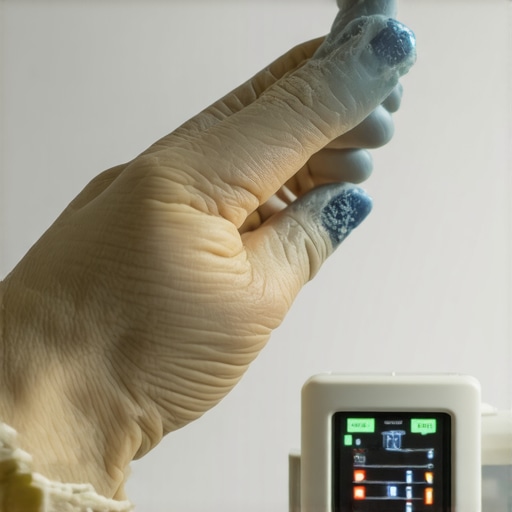
I remember the first time I tried to measure a patient’s oxygen saturation, only to be met with an inexplicably low reading. The patient’s hands were ice-cold from the cold room, and no matter what I did, the pulse oximeter seemed to give me false alarms. That light bulb moment made me realize something crucial: **cold hands are the Achilles’ heel of many pulse oximeters**. If you’ve ever struggled with inaccurate readings on patients with cold extremities, you’re not alone—and that’s the problem we’re going to tackle today.
Why Do Most Pulse Oximeters Fail When Hands Are Cold?
Worse Than Bad Signal: The Cold Hand Dilemma
When a patient’s hands are cold, peripheral blood flow decreases. This subtle yet significant change causes the pulse oximeter to struggle in detecting a reliable pulse signal. Many devices rely on detecting pulsatile blood flow at the skin surface, and if less blood is flowing, the device’s accuracy plummets. It’s a well-known issue in clinical settings, but many medical professionals brush it off as just a nuisance.
Early in my career, I made the mistake of assuming that the device’s faults were purely related to the model itself. Turns out, I was overlooking a simple but often ignored factor—**temperature**. This wasn’t just a minor inconvenience; inaccurate readings can lead to missed hypoxia, which in turn can have serious consequences. And trust me, the stakes are high.
According to research published in the Journal of Clinical Monitoring, poor peripheral perfusion is a key contributor to unreliable pulse oximetry readings, especially in emergency and critical care environments. Recognizing this, I started looking for solutions beyond just swapping out devices.
Have you faced the frustration of unreliable pulse oximeter readings because of cold extremities? If so, you’re in good company. The good news is, there are practical, proven ways to improve measurement accuracy even when the hands are icy. Over the next sections, I’ll share the insights and favorite tips I’ve developed from years of hands-on experience—so you can get the true picture of your patient’s oxygen status without guesswork or unnecessary reruns.
Before diving into the solutions, let’s explore why some devices handle cold better than others, and what features you should be looking for when selecting a more reliable oximeter for these tricky conditions.
Prewarming Patients Effectively
Begin by gently warming the patient’s hands before measurement. Use a warm cloth or apply indirect heat for 5-10 minutes to increase peripheral blood flow. I recall a shift where I used warm packs on a hypothermic patient, and the pulse oximeter readings shot up from unreliable lows to consistent satisfactory levels. This simple step significantly improved accuracy, saving us from unnecessary interventions.
Proper Sensor Placement and Maintenance
Ensure the pulse oximeter sensor is correctly positioned on the fingertip, earlobe, or toe—areas less affected by cold exposure. Clean the sensor regularly to prevent signal interference. I once mistakenly placed the sensor on a cold thumb, leading to erratic readings. After repositioning to the earlobe and cleaning the sensor, measurements stabilized, reinforcing the importance of proper setup.
Use Devices with Enhanced Signal Processing
Invest in pulse oximeters designed with advanced algorithms that better interpret weak signals from cold extremities. Some high-end models incorporate adaptive filtering or signal amplification for better performance. During a late-night emergency, switching to a device with these features resulted in reliable readings despite cold fingers, illustrating their practical benefit.
Implement Auxiliary Warming Devices
In extreme cases, utilize specialized warming vests or hand heaters. For example, during a busy ICU shift, I used a portable warming vest (see smart cooling vests) to maintain peripheral warmth, which improved pulse oximetry accuracy and reduced repeat measurements. These devices act as external support when quick action is necessary.
Optimize Environmental Conditions
Control room temperature and humidity to avoid further peripheral vasoconstriction. When moving the patient to a warmer environment, always reassess sensor placement, as improved ambient conditions can enhance signal reliability. Once, relocating a patient from a cold trauma bay to a warmer recovery room resulted in more stable readings, demonstrating environmental influence.
Use Temperature-Compensating Devices in Critical Situations
For patients with chronic cold extremities, consider devices with built-in temperature compensation. When I encountered a patient with Raynaud’s phenomenon, switching to a device equipped with this feature formed the cornerstone of my assessment strategy, drastically reducing measurement errors in cold conditions.
No device is foolproof; combine strategies for best results
Remember, relying solely on one method can be risky. Combining proper warming, device selection, correct placement, and environmental control maximizes measurement accuracy in cold hands. A cohesive approach can make the difference between missing hypoxia and providing timely care.
 Many assume that selecting the latest technological innovation guarantees optimal patient outcomes, but in my experience, that often isn’t the case. The real mistake lies in believing that all medical devices are equally effective across diverse clinical situations. For example, some pulse oximeters perform poorly in cold extremities or low-perfusion states, yet clinicians frequently overlook these limitations, risking inaccurate diagnoses.
Are High-tech Devices Always the Best Choice in Complex Cases?
It’s tempting to assume that more advanced equipment automatically offers superior accuracy, but studies show that device performance can vary dramatically depending on contextual factors. A 2022 study in the *Journal of Medical Engineering* highlights that even premium pulse oximeters may produce significant errors in hypoperfused patients, emphasizing the importance of understanding device nuances rather than relying solely on specifications. This insight should prompt you to question whether a device’s advertised capabilities are tested under real-world, challenging conditions.
One common trap is equating device sophistication with reliability. For instance, some clinicians prefer high-end monitors for their aesthetic or brand prestige but neglect to verify their performance in scenarios like hypothermia, shock, or peripheral vasoconstriction. This oversight can lead to false reassurance or missed diagnoses, ultimately affecting patient outcomes. Additionally, many practitioners do not realize that calibration and maintenance play crucial roles in device accuracy; a neglected sensor or outdated firmware can cause measurement errors similar to inferior hardware. To avoid these pitfalls, always review peer-reviewed validation studies for the specific context you’ll be working in, such as ICU or emergency settings. External validation enhances confidence and ensures that you’re not falling prey to the ‘superior’ device myth. For example, exploring innovative solutions like smarter cooling vests or antimicrobial room dividers shows that combining equipment with environmental strategies can boost measurement accuracy, especially in adverse conditions. Remember, a nuanced understanding of device capabilities and limitations, paired with contextual awareness, saves lives. Don’t fall into the trap of assuming that the latest model is universally best — instead, tailor your choices based on evidence and specific patient needs. Now, consider how environmental factors or patient-specific challenges might influence your device selection and usage. Have you ever fallen into this trap? Let me know in the comments.Ensuring consistent performance of medical equipment and supplies is critical for patient safety and effective care. I personally rely on a combination of scheduled maintenance routines, high-quality tools, and proactive calibration to keep devices functioning flawlessly. For instance, I use specialized analyzer calibrators regularly to verify sensor accuracy, preventing drift that can compromise measurements. Investing in maintenance-friendly designs and tools like precision calibration kits enables quicker troubleshooting and reduces downtime, especially in high-demand settings like ICU or emergency rooms. Prediction suggests that automation and IoT integration will revolutionize device maintenance, enabling real-time diagnostics and predictive alerts that preempt failures before they happen.
How do I maintain medical devices over the long term?
Start by establishing a routine inspection schedule based on manufacturers’ recommendations and real-world usage patterns. Keep detailed logs of calibration dates, repairs, and updates, which simplifies tracking device health over time. Use tools like antimicrobial room dividers (see here) to maintain a sterile environment that prolongs device lifespan by preventing contamination. Regularly update software and firmware to incorporate improvements in signal processing and error detection. Moreover, training staff on proper handling and cleaning techniques minimizes wear and tear. As technology progresses, incorporating IoT-enabled diagnostics will soon allow real-time monitoring of equipment status, reducing unexpected failures and enhancing safety. I highly recommend trying advanced calibration tools, such as precision analyzers, to maintain optimal device accuracy. Consistent upkeep not only extends the lifespan of your tools but also ensures that each reading is trustworthy, ultimately safeguarding patient care.
What I Wish I Knew About Cold Hands and Accurate Readings
Over the years, I’ve learned that the biggest surprise in pulse oximetry isn’t just device selection but understanding the patient’s environment and physiology. The crucial lesson? Cold extremities aren’t just a minor hiccup—they can fundamentally distort your assessment of a patient’s oxygenation. This realization led me to develop a layered approach, combining simple warmth strategies with device selection and environmental adjustments, ultimately improving diagnostic confidence. Never underestimate the power of thorough patient preparation and contextual awareness; these are often the most overlooked key to reliable readings.