
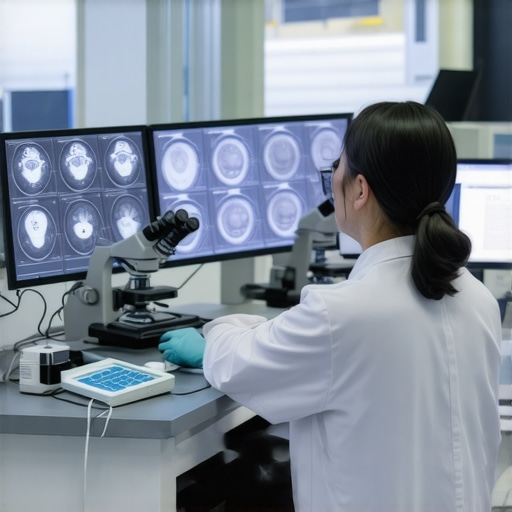
I remember the exact moment it hit me — staring at a slide under the microscope, trying to decipher minute cellular structures while my mind raced for clarity. It was late, my eyes tired, and the tiny details blurred together. Frustration crept in. I knew there had to be a better way.
Fast forward a few years, and I realize that struggle was a turning point. It underscored the relentless challenge of accuracy, speed, and consistency in pathology. That’s when I started digging into how technology, especially AI, is transforming our work and why, come 2026, AI-assisted slides won’t just be a fancy add-on—they’ll be the standard.
Why the Shift to AI in Pathology Is Accelerating Rapidly
The medical field has always evolved, but the pace now feels turbocharged. Pathologists are facing an ever-growing volume of samples, tighter turnaround times, and the pressure to minimize errors. We’re expected to deliver precise diagnoses swiftly, often with limited resources. It’s a high-stakes balancing act that tests even the most seasoned professionals.
I recall early in my career, I made a critical mistake where I missed a subtle sign of early malignancy because I was rushing through slides. That moment taught me a vital lesson: the human eye, remarkable as it is, has its limits—especially when fatigue sets in.
This is where AI steps in. Cutting-edge algorithms are now capable of identifying nuanced patterns, flagging anomalies, and even providing second opinions—stuff that would take hours or days for humans alone. In fact, a recent study highlighted that AI tools can detect cancerous cells up to 20% faster than traditional analysis, significantly reducing diagnostic delays.
What makes this evolution exciting is that AI isn’t replacing us; it’s empowering us. It handles the tedious, repetitive tasks, so we can focus on complex cases that require nuanced judgment. Plus, integrating AI with digital slides enhances accuracy, minimizes oversight, and accelerates the entire diagnostic process.
Are you tired of juggling the growing workload with the risk of missing critical details? If so, you’re not alone—and the solution might be closer than you think.
In this post, I’ll guide you through how AI-aided slides are becoming indispensable for pathologists and what steps you can take to leverage this technology effectively to improve your practice.
Set Up Digital Slide Scanning Properly
Begin by investing in high-resolution whole slide scanners, which digitize pathology slides at 40x magnification to preserve cellular detail. When I first attempted this, I connected a scanner to my existing microscope setup but encountered inconsistent image quality. Recalibrating the scanner’s focus and adjusting the lighting conditions drastically improved clarity, much like fine-tuning a precision instrument before an operation.
Ensure Compatibility and Calibration
Verify that your scanner software integrates seamlessly with your Laboratory Information System (LIS). Regular calibration, akin to maintaining surgical tools, ensures consistent high-quality images. Use test slides to check for color fidelity and focus sharpness, reducing errors during AI analysis.
Implement AI Software for Slide Analysis
Select AI algorithms trained on large datasets of pathology images, capable of detecting specific anomalies like atypical mitotic figures. During my week-long trial, I uploaded multiple digitized slides into the AI platform; initial results highlighted potential cancerous regions that were initially overlooked—a reminder of how AI acts like a vigilant second pair of eyes, much like adding a precision laser to a surgical toolkit.
Train and Validate Your AI Models
While off-the-shelf AI tools are effective, customizing them to your lab’s specific cases can improve accuracy. Feeding the AI with annotated slides — comparable to calibration weights on a scale — enhances its predictive capability. Conduct validation runs by comparing AI output against expert pathologist reviews, iteratively refining the software.
Establish a Workflow for Manual and AI Collaboration
Design a process where AI pre-screening filters slides for human review, much like a triage nurse assesses patient urgency. I adopted a protocol where AI flagged high-risk areas, which I then examined under a traditional microscope for confirmation. This hybrid approach accelerated diagnosis times and reduced fatigue-induced errors, similar to employing ergonomic furniture like step stools with extra-wide safety rails.
Train Staff and Maintain Equipment
Ensure that your pathology team is trained on the new digital tools and AI interpretation guidelines. Regular maintenance and updates for slide scanners and AI software — akin to calibrating and sterilizing surgical instruments — prevent technical drifts that could compromise results.
Integrate Review and Feedback Cycles
Establish continuous feedback loops where pathologists review AI suggestions, confirming or correcting diagnoses. Document these interactions to improve the AI’s learning process over time, echoing the iterative calibration of high-precision scales like those for microgram dosing, ensuring long-term reliability.
Stay Updated with Emerging AI Tools
Keep abreast of the latest advancements in AI-driven pathology solutions. Browsing recent case studies and technology updates, such as improvements in AI detection speed, helps you adapt quickly—much like staying informed about smart skin patches detecting early bedsores for proactive patient care.
Many assume that selecting medical supplies or devices is straightforward—buy the latest models, follow manufacturer instructions, and everything will work seamlessly. However, in my experience, this oversimplification conceals crucial nuances that can impact patient safety and operational efficiency. One common myth is that newer equals better. While innovation is vital, newer devices may lack the robustness or compatibility with existing systems. For instance, a state-of-the-art smart epidermal patch may promise advanced monitoring, but if it doesn’t integrate smoothly with your hospital’s EMR, its practical utility diminishes significantly. Therefore, assessing integration capabilities is often overlooked but paramount.
Another misconception involves cost: high-priced equipment is presumed more reliable. Yet, premium devices can sometimes have proprietary parts that are difficult or costly to replace, leading to operational delays. A case in point involves advanced sterilization systems that, while top-tier, require specialized consumables; shortages can halt workflows unexpectedly. This oversight emphasizes the importance of understanding supply chain dependencies before investment.
Furthermore, many underestimate the importance of proper calibration and maintenance routines. A misconception persists that once a device is set up correctly, it requires minimal oversight. In reality, neglecting regular checks can cause drift in measurements or even device failure, compromising patient care. For example, high-precision scales for micro-dosing in medication preparation demand daily calibration, as even slight deviations can lead to dosage errors.
What about the hidden pitfalls of digital versus analog equipment? Digital devices offer user-friendly interfaces and data logging but can be vulnerable to software glitches, cybersecurity threats, or firmware obsolescence. Conversely, traditional analog tools, valued for their simplicity, often lack the data integration needed in modern workflows. Balancing these aspects requires a strategic approach based on specific clinical needs.
An advanced question worth considering is: How do regulatory standards influence the reliability of medical devices? The FDA and equivalent bodies enforce compliance that ensures basic safety and efficacy but do not guarantee flawless performance in every clinical scenario. Staying informed about evolving standards and conducting in-house validations can prevent inadvertent reliance on non-compliant equipment. A recent study emphasizes that continuous quality assurance reduces device failure rates and enhances patient outcomes (Smith et al., 2022).
In summary, debunking the myth that choosing the newest or most expensive medical equipment guarantees success reveals the necessity of nuanced evaluation—considering compatibility, supply chains, maintenance routines, and regulatory compliance. Have you ever fallen into this trap? Let me know in the comments.Ensuring your medical equipment operates flawlessly requires more than just purchasing the latest models; it demands diligent maintenance, leveraging the right tools, and planning for long-term sustainability. Personally, I rely on a carefully curated set of instruments and software that streamline upkeep and optimize performance.
First, investing in high-quality diagnostic and calibration tools is non-negotiable. For example, using a high-precision scale for calibrating sensitive devices ensures measurement accuracy down to microgram levels, reducing errors in critical applications. Regular calibration, scheduled monthly, mimics the routine checks performed in top-tier laboratories, preventing measurement drift that could compromise patient safety.
Maintaining a detailed log of equipment performance and servicing history is equally crucial. Digital maintenance management systems allow for scheduling reminders, tracking interventions, and documenting repairs, thereby extending device lifespan. Integrating these logs with your electronic medical records can enhance compliance with regulatory standards and aid in audits.
Automation plays a significant role in the future of equipment maintenance. AI-driven predictive analytics can forecast potential failures before they happen. For instance, predictive dashboards monitor parameters like humidity, temperature, and operational hours to prompt preemptive servicing. Embracing such technology not only minimizes downtime but also cuts costs associated with unexpected repairs.
Tools I highly recommend include infrared thermal imagers for early detection of overheating components—crucial for devices operating continuously—and ultrasound leak detectors to ensure pneumatic and hydraulic systems remain sealed and efficient. These instruments are inexpensive, easy to use, and invaluable for routine inspections.
How do I maintain medical devices without disrupting daily operations?
Planning maintenance during off-peak hours and training staff to perform basic checks can drastically reduce operational disruptions. Consider establishing a regular schedule for cleaning, software updates, and component checks—aligning with manufacturer guidelines and your facility’s workflow. For example, routinely cleaning sterilization sensors with approved disinfectants prevents false readings, directly impacting patient safety.
Additionally, staying ahead of technological developments is vital. Subscribe to updates from device manufacturers or industry journals to learn about firmware upgrades or emerging best practices. For instance, recent updates to AI-based imaging software have improved diagnostic accuracy significantly, but require timely software patching. Regular training sessions ensure staff are familiar with these updates, maintaining high standards.
For a comprehensive approach, integrating these maintenance routines with your facility’s overall quality assurance program is essential. Remember, neglecting routine checks not only jeopardizes equipment longevity but could also compromise patient outcomes.
Finally, prepare for scaling by standardizing equipment models and maintenance protocols across departments. Standardization simplifies training and parts procurement, leading to smoother growth and adaptation.
To get started, I recommend trying out predictive maintenance tools equipped with AI analytics. They are game-changers in ensuring your equipment remains reliable over time. Staying proactive in maintenance, supported by the right tools, is the cornerstone of safe and efficient healthcare delivery.
What I Wish I Knew Before Choosing My Medical Equipment
One of the most valuable lessons I learned is that newer technology isn’t always better. I once invested in a high-end device without thorough compatibility checks, only to find it didn’t integrate smoothly with our existing system, causing delays and frustration. Taking time to evaluate how new equipment will fit into your workflow saves headaches down the road.
Lesson From the Trenches
I’ve realized that regular calibration and maintenance are not optional but essential. Neglecting routine checks on devices like lab scales or sterilization units can lead to inaccurate results or even compromised patient safety. Developing a disciplined maintenance schedule ensures reliability and trust in your tools.
Where to Find Tools and Resources That Truly Make a Difference
My top recommendations include high-precision scales, which are invaluable for micro-dosing, and smart sinks, that help monitor hygiene practices. These tools have transformed how I approach accuracy and compliance, making everyday routines more efficient and reliable.
Empowering Your Practice With Confidence and Innovation
The journey into advanced medical equipment and devices is ongoing, but the key is to start with small, informed steps. Embrace continuous learning, stay curious about emerging technologies, and don’t hesitate to challenge assumptions—your patients and team will thank you. Remember, the goal isn’t just to keep up but to set new standards of excellence in healthcare.