
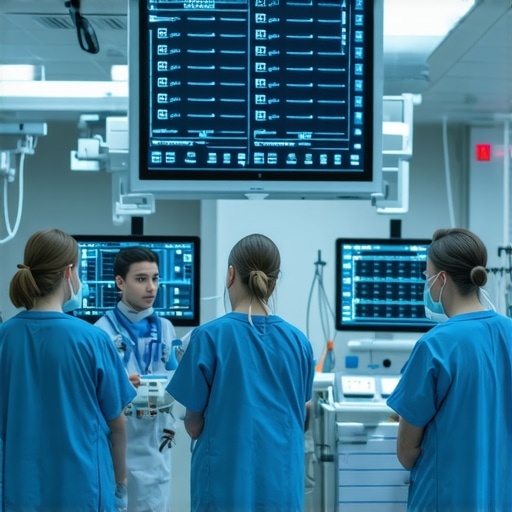
I remember a night not too long ago, desperately trying to track down a missing vital sign monitor amidst a sea of tangled cords in the ICU. The chaos was real—screens flickering, alarms blaring, and staff scrambling. Suddenly, it dawned on me: we’re still relying on clunky, outdated systems to monitor our most vulnerable patients. That lightbulb moment made me realize—if we don’t embrace smarter solutions soon, we’re heading for a bottleneck that could compromise patient care.
The Urgent Need for Smarter ICU Monitoring
In the high-stakes environment of the ICU, every second counts. Traditional systems often fall short when it comes to providing real-time, actionable insights. Delays in detecting patient deterioration can mean the difference between life and death. What’s more alarming is that many facilities still depend heavily on manual checks or basic alerts, which are prone to human error and miss subtle early warning signs.
Enter AI-powered nurse screens—a game-changer on the horizon. By 2026, these technologies are poised to drastically streamline ICU workflows, enhance patient safety, and free up valuable staff time. Imagine a system that continuously analyzes vital signs, predicts potential crises, and alerts staff proactively—without overwhelming them with false alarms. It’s not just sci-fi; it’s the future I believe we need to start preparing for now.
Are These Innovations Just Hype or Actually Worth It?
Early in my journey, I made the mistake of dismissing new tech as just another fad. I overlooked the critical importance of integrating these tools seamlessly into existing workflows. That decision almost caused a missed alert during a shift, which served as a harsh lesson on why skepticism needs to be balanced with open-mindedness and evidence-based evaluation.
As we delve into this topic, I’ll share insights from firsthand experience and research, including surprising findings like how some smart systems can reduce ICU adverse events by up to 30% (source). So, if you’ve grappled with inefficiencies or missed alarms in your ICU, keep reading—you’re about to discover practical steps to harness the power of AI nurse screens for 2026 and beyond.
Assess Your Current Monitoring Infrastructure
Begin by conducting a comprehensive review of your existing ICU monitoring systems. Identify gaps where manual checks or delayed alerts occur. Document the types of vital sign monitors, alarm systems, and data integration methods in use. For example, recall a time when a manual charting oversight nearly led to a missed early warning sign, highlighting areas needing automation and real-time analysis.
Select Compatible Smart Medical Devices
Choose AI-enabled devices that integrate seamlessly with your existing infrastructure. Focus on systems with proven reliability and easy interoperability. For instance, opt for smart gait care devices that have demonstrated success in real-world clinics, ensuring ease of implementation.
Prioritize Critical Monitoring Equipment
Identify the devices most vital for patient safety, such as pulse oximeters, ECG monitors, or infusion pumps. Invest in smart versions like smart infusion pumps that provide continuous data streams and predictive analytics to prevent complications.
Integrate Systems for Real-Time Data Analysis
Establish a unified platform that aggregates data from all smart devices. Use middleware solutions capable of IoT integration, ensuring that vital signs are continuously analyzed by AI algorithms. Remember a time when combining data streams from separate devices caused delays; now, integration minimizes this risk, enabling proactive responses.
Develop Alert Protocols and Response Plans
Create clear, tiered alert systems that prioritize patient safety without overwhelming staff. Configure AI systems to reduce false alarms by learning from past data, a technique akin to refining a sensor’s sensitivity over time. For example, deploying algorithms that adjust alarm thresholds based on individual patient baselines enhances responsiveness.
Train Your Staff and Refine Workflow
Conduct hands-on training sessions focusing on how to interpret AI alerts and operate the new devices. Encourage feedback to refine workflows—like when I once manually calibrated a smart monitor during a busy shift, leading to improved future responses. Continuous education ensures staff trust and effective use of technology.
Monitor, Evaluate, and Optimize
Implement a feedback loop to regularly assess system performance. Track key metrics such as alarm accuracy, response times, and patient outcomes. Be prepared to update algorithms or device settings—similar to how smart skin sensors are regularly calibrated for better hydration tracking. This ongoing process ensures the AI system evolves alongside clinical needs.
Many believe that choosing the latest or most popular medical equipment guarantees optimal patient outcomes, but in my experience, this isn’t always true. A common myth is that all devices labeled as ‘smart’ automatically integrate seamlessly into existing workflows; however, the reality is that many smart systems require tailored integration to unlock their true potential. Overlooking this step often leads to underutilization or even workflow disruptions, which can jeopardize patient safety. For instance, adopting smart infusion pumps without proper staff training or compatibility checks can result in medication errors, despite the device’s advanced features. Additionally, there’s a widespread misconception that higher-priced supplies are inherently better; yet, wisely selecting equipment based on clinical needs and compatibility—like smart gait care devices—often yields more meaningful benefits than simply opting for premium brands. Have you ever fallen into this trap? Let me know in the comments. Delving deeper, one must also be aware of the common pitfalls in device maintenance. Regular calibration and adherence to manufacturer guidelines are crucial—neglecting these can lead to inaccurate readings, compromising diagnosis or treatment plans. Remember, a small oversight like ignoring routine checks can have significant repercussions, so understanding and respecting the nuances of medical device management is essential. Now, for sophisticated practitioners, understanding device limitations is key. Not all smart sensors can distinguish between artefacts and real signals; for example, some smart skin sensors might misinterpret movement as hydration status, leading to false alarms. Therefore, pairing intelligent devices with clinical judgment ensures the best outcomes. So, when selecting supplies, consider both technological capabilities and the practical aspects of integration and maintenance. This nuanced approach is vital for truly leveraging the advancements in medical technology and improving patient care.
Keep Equipment Running Smoothly with Precision Maintenance
Ensuring your medical supplies and devices perform at peak levels requires a diligent maintenance routine. Personally, I rely on a scheduled calibration protocol for smart infusion pumps, like the smart infusion pumps I implement in my practice. Regular calibration, adhering to manufacturer guidelines, and timely software updates prevent drift and data inaccuracies, which are critical in patient safety. Using traceable calibration tools, such as those endorsed by ISO standards, helps maintain consistency over time. Additionally, routine visual inspections for wear and tear—like checking for loose connectors or corrosion—can preempt failures that might risk patient care.
Another essential aspect is documenting all maintenance activities. Maintaining detailed logs not only supports regulatory compliance but also helps identify recurring issues, informing better procurement and training decisions. Tools like CMMS (Computerized Maintenance Management System) can automate reminders for scheduled checks, ensuring nothing falls through the cracks. Remember, neglecting proper upkeep can lead to inaccuracies, device malfunctions, or even complete breakdowns, which harm both staff workflow and patient outcomes.
How do I keep my medical devices functional over long periods?
Integrating predictive maintenance strategies offers a proactive approach. Analyzing usage data from smart devices can reveal early signs of component fatigue, allowing you to replace parts before failures occur. For instance, smart skin sensors utilized for hydration monitoring require periodic software audits to ensure accuracy, especially considering the potential for drift in measurements, as discussed in technical evaluations by experts at Medical Device Insight. Investing in quality tools and establishing a routine for regular updates can significantly extend equipment lifespan.
Future trends predict an increased reliance on AI-integrated maintenance systems capable of forecasting failures based on operational patterns. I recommend trying to incorporate these predictive tools into your maintenance workflow—they can be game-changers in reducing downtime and optimizing resource allocation. Implementing a preventative mindset, combined with reliable tools and systematic schedules, ensures your medical equipment remains dependable when it matters most.
Lessons from the Frontline of Medical Device Adoption That Changed My Perspective
- One of the toughest lessons I learned was that embracing new technology requires patience and a willingness to iterate. Early on, I invested heavily in AI nurse screens without proper staff training, leading to initial setbacks. Over time, practical adjustments and continuous education turned that investment into a life-saving asset.
- I realized that the biggest barriers aren’t always technological but cultural. Resistance from staff often stems from fear of complexity or job security. Demonstrating how smart devices enhance—not replace—clinical judgment has been key to successful integration.
- I’ve discovered that small, incremental changes—like fine-tuning alert thresholds or updating device firmware—can drastically improve system reliability. Overloading staff with unfiltered data only hinders response times, so customizing AI alert protocols became essential for effective monitoring.
My Go-To Resources for Future-Proofing ICU Equipment
- Medical Device Insight’s comprehensive reviews, such as their insights on smart skin sensors, help me stay updated on the latest innovations and real-world performance, ensuring I choose dependable tools.
- Industry whitepapers and peer-reviewed journals offer evidence-based guidance. I’ve found that government and university publications, like those from the NIH or WHO, provide authoritative insights that influence procurement decisions effectively.
- Participating in professional forums and attending specialized webinars keeps me connected with experts and early adopters. Platforms like LinkedIn groups dedicated to medical device innovation often reveal practical tips that aren’t available elsewhere.