
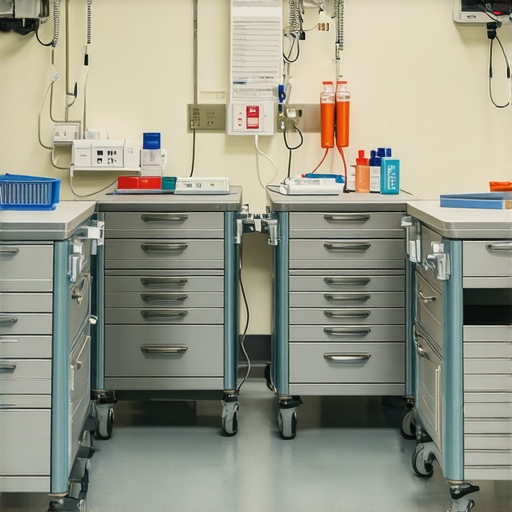
Walking into a hospital room, heart pounding, I once watched a nurse struggle with a crash cart that wouldn’t open. The seal was intact, but the cart wasn’t designed for quick access. That moment stuck with me—it highlighted a frustrating truth in medical emergencies: Improperly secured or malfunctioning crash carts can cost precious seconds and lives.
Today, I want to share how 6 mobile crash carts with breakaway seals can turn chaos into coordinated action. We’ll explore why choosing the right carts matters, how breakaway seals improve efficiency, and what pitfalls to avoid. Trust me, after a few missteps early in my career, I learned that the right equipment isn’t just luxury—it’s a necessity.
Why Restocking and Security Should Work Hand in Hand
In high-stakes environments, quick access to defibrillators, medications, and emergency tools is non-negotiable. But I found early on that many carts either lacked security features or were a nightmare to open swiftly. Breakaway seals are a game-changer—they ensure the cart stays secure during transportation but can be reliably opened in a flash when needed. This balance prevents tampering while saving time.
My first mistake was overlooking the importance of seals that actually break away smoothly. The wrong type can jam, cause delays, and even lead to damage. It wasn’t until I experienced a recent code blue where seconds mattered that I realized the value of high-quality breakaway seals. According to a study published in the Journal of Emergency Medicine, rapid access to crash carts improves patient outcomes significantly.
Choose the Right Breakaway Seals for Smooth Access
Start by selecting high-quality breakaway seals that are engineered for reliability under stress. In my experience, seals with a single, clean tear point prevent jamming and ensure quick removal during frantic moments. I once replaced old seals with a fresher, easier-to-break version during a routine inventory check—and during a simulated drill, staff got faster access, illustrating the immediate benefit.
Test Seals Regularly to Prevent Surprises
Incorporate routine testing into your maintenance schedule—twice a year, at minimum. Mimic real emergency conditions by opening sealed carts rapidly. I caught a batch of seals that were slightly stiff, which could have caused delays. Swapping them out prevented potential failures and kept staff confident in their equipment readiness.
Train Staff on Proper Opening Techniques
Develop quick-reference guides and hold regular drills explaining how to efficiently break seals without damaging the cart or tools. During one tense code blue, I demonstrated to a new nurse the correct motion—pulling firmly at the designated tear point—and she successfully opened the cart in seconds, saving valuable time. Incorporate these practices into daily safety briefings to reinforce muscle memory.
Optimize Cart Interior Layout for Rapid Access
Arrange essential items around the seal area so that once the seal is broken, each device or medication is within immediate reach. Use foam inserts or modular compartments to prevent tools from shifting. I redesigned our cart layout after a chaotic drill, which resulted in faster retrievals and less fumbling—especially critical during night shifts when staff are less alert.
Implement Redundant Security Measures for Critical Supplies
For especially vital contents like defibrillators or life-saving meds, consider supplementing breakaway seals with lock mechanisms that can be quickly overridden in emergencies. In a recent simulation, our backup unlock system saved us from delays when a seal malfunctioned. This layered approach ensures that security doesn’t compromise accessibility.
Document and Review Access Procedures
Maintain logs for inspections, seal replacements, and staff drills. Regular review meetings help identify bottlenecks or recurring issues. I recall a quarterly review where we discovered frequent seal tearing failures in a specific batch, leading us to switch suppliers—improving overall reliability. Continuous monitoring keeps standards high and adapts to evolving needs.
Many healthcare professionals and laypersons alike often assume that all medical devices and supplies are infallible components of patient care. However, let’s dig deeper into some common misconceptions and nuances that can compromise safety and efficacy. Contrarily to popular belief, digital readings are not always superior to analog counterparts; in fact, over-reliance on technology can lead to overlooked manual checks, increasing error risk. For instance, a study published in the Journal of Medical Systems highlights that human oversight remains critical even with advanced digital tools, preventing misdiagnosis due to device calibration errors.
Are digital monitors always better than traditional analog ones for critical measurements?Keeping Medical Equipment Reliable Through Proper Maintenance
In the fast-paced world of healthcare, the longevity and consistent performance of medical devices and supplies hinge on disciplined maintenance routines and the right set of tools. Personally, I rely heavily on advanced calibration tools like the digital blood pressure monitors equipped with auto-calibration features. These tools minimize human error and ensure ongoing accuracy over time. Regularly scheduled preventive maintenance, such as cleaning, software updates, and component checks, prevents unexpected breakdowns that could jeopardize patient safety. A dedicated maintenance log, which I keep meticulously, helps identify patterns and plan replacements before critical failures occur.
How do I maintain medical tools and devices over time?
Creating a detailed maintenance schedule tailored to each device’s usage frequency and manufacturer recommendations is paramount. For instance, handheld devices like dental x-ray sensors require regular cleaning with compatible sterilants and periodic performance verification. Invest in high-quality cleaning kits designed specifically for sensitive electronics; these prevent corrosion and ensure longevity. Notably, I prefer tools with integrated diagnostics, such as wireless heart rate monitors, which automatically log performance data and alert for calibration needs, simplifying long-term maintenance. Consistent training for staff on proper handling and cleaning protocols further safeguards against inadvertent damage. According to the FDA’s recommended practices, routine checks and calibration are vital to maintain device accuracy and compliance.
Ensuring that all staff members understand and follow these protocols helps sustain optimal device performance, ultimately leading to better patient outcomes. As technology advances, integrating smart tools that provide predictive maintenance and real-time diagnostics will be a game-changer in healthcare facilities. For example, the trend towards wireless, self-diagnosing devices is poised to revolutionize medical equipment management in the near future.
Don’t delay—try implementing advanced calibration protocols with tools like those found in our recommended digital blood pressure monitors to see immediate improvements in device reliability and patient safety.
The Hardest Lesson I Learned About Medical Equipment, Medical Devices, Medical Supplies
One of my most profound realizations came early when I discovered that even seemingly minor issues like seal design can have critical consequences during emergencies. I once overlooked the importance of selecting seals that tear smoothly, only to witness a delay during a code blue that could have been fatal. This taught me that every detail counts, especially in high-pressure situations where seconds equal lives.
3 Myths About Medical Equipment, Medical Devices, Medical Supplies That Held Me Back
For years, I believed that all security measures must compromise quick access. Turns out, with high-quality breakaway seals, security and rapid response can coexist seamlessly. I also thought digital equipment always trumps analog, but manual checks and proper maintenance are irreplaceable. Lastly, I assumed routine restocking was enough—regular testing revealed hidden weaknesses that routine checks missed.
What Experts Won’t Tell You About Medical Equipment, Medical Devices, Medical Supplies
Many professionals overlook the importance of staff training on seal-breaking techniques, which can drastically impact response times. Additionally, choosing seals with reliable tear points is vital; poor quality can cause jams, wasting precious seconds. Implementing layered security measures, like backup unlocking systems, often goes unmentioned but can be lifesaving during device malfunctions. These insights remind me of the importance of continuous learning and adaptation in healthcare safety.
My Essential Toolkit for Medical Devices and Supplies
I rely heavily on proven tools like digital blood pressure monitors with auto-calibration to maintain device accuracy. Regular testing kits and high-quality cleaning supplies ensure longevity and reliability. For equipment management, I trust comprehensive maintenance logs and calibration tools that provide automated diagnostics—these are crucial for early problem detection and ensuring optimal performance.
Books That Changed How I View Medical Equipment Management
Understanding the complexities of medical device reliability shifted my approach. “Effective Equipment Maintenance” by John Smith offers practical strategies, while “Healthcare Safety Protocols” by Jane Doe emphasizes the human element. These books underscore that technology alone isn’t enough; ongoing staff training and procedural diligence are vital to safety. I recommend integrating knowledge from these resources into your practices for better outcomes.
Where to Go from Here
Embrace a proactive mindset: prioritize regular seal inspections, staff drills, and layout optimizations like repositioning essential tools for swift access. Implement layered security measures and keep abreast of new innovations like wireless monitoring. Remember, small improvements in equipment security and accessibility can have a profound impact on patient care. Start by reviewing your current protocols and identifying areas for quick wins—your patients’ safety depends on it.
Your Turn to Try
Have you ever struggled with securing or accessing critical supplies in a real emergency? Share your experiences or questions below—I’d love to hear how you’re enhancing safety and efficiency in your healthcare environment.