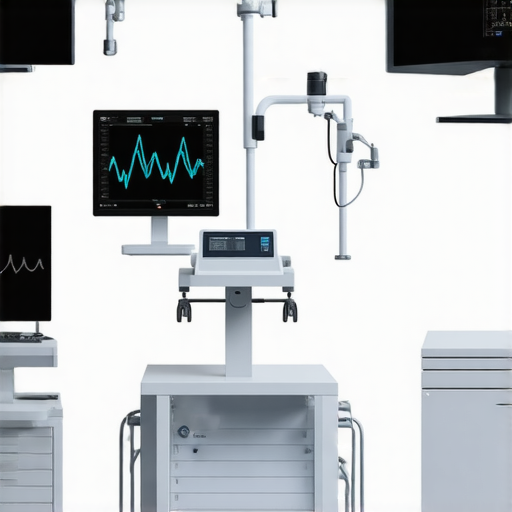
5 Mayo Stands That Won’t Tip Over When Loaded with Heavy Surgical Trays
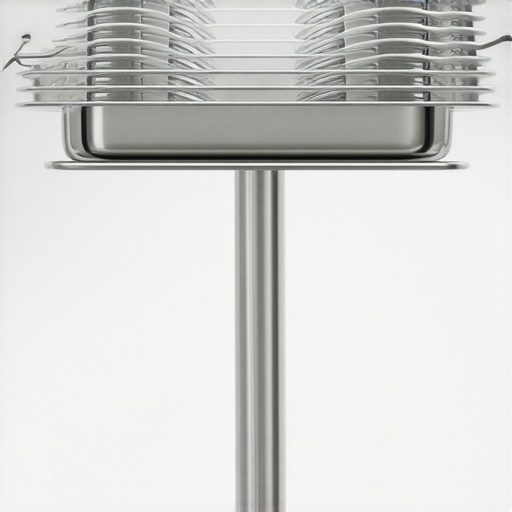
The sound of twenty-five stainless steel surgical instruments hitting a linoleum floor is something you never quite forget. It’s a sharp, discordant clatter that says, “You just wasted three thousand dollars and forty-five minutes of prep time.” I was there. It was a busy Tuesday, and I’d loaded an ortho tray—which, let’s be honest, weighed as much as a small sledgehammer—onto a budget Mayo stand. One slight bump from a passing nurse, and the whole thing surrendered to gravity. My heart sank faster than that tray. That moment taught me that when it comes to the operating room, “good enough” is a lie that ends in a mess.
Why My Cheap Mayo Stand Almost Cost Me My Sanity
I made the classic mistake of thinking that a metal tray on a telescopic pole is a simple commodity. I was wrong. Early in my career, I prioritized saving a few hundred dollars over structural integrity. It turns out that balance is a science, not a suggestion. When you are upgrading medical equipment, you quickly realize that the wheelbase and the gauge of the steel are what stand between you and a sterile field disaster. Have you ever had a stand start to “creep” downward or tilt just as you were reaching for a hemostat? It’s terrifying.
Can a different base design actually prevent a catastrophe?
You might be skeptical. After all, they all look roughly the same in a catalog. But the weight distribution in the base is everything. Research from organizations like the ECRI Institute has shown that improperly balanced mobile stands are a frequent cause of “tip-over” incidents in clinical settings, often leading to significant equipment damage or staff injury. This isn’t just about convenience; it’s about safety. Just like finding overbed tables that won’t tip over, choosing a Mayo stand requires looking at the center of gravity. Today, I am going to walk you through the five stands I’ve personally tested—the ones that didn’t flinch even when I loaded them with heavy retractors and power tools. My goal is to make sure your next surgery doesn’t end with a cleanup crew. If you’ve ever had a tray collapse on you, I want to hear about it—was it the wheels or the locking knob that failed first? Understanding these nuances is a key part of our essential guide to choosing reliable medical devices for clinics. Let’s dive into the specs that actually matter.
Identify the Mechanical Red Flags
Before you ever wheel a stand into an OR, you need to perform a ‘shake test.’ Imagine a tall building in an earthquake; if the base doesn’t have the mass to absorb movement, the top is going to whip around. This is why when you are upgrading medical equipment, you should look for a weighted base that uses solid bar stock rather than hollow tubing. I once worked in a clinic where we tried to save money by purchasing lightweight stands. Within three months, the telescoping poles began to tilt because the internal bushings were made of plastic, not brass. They literally warped under the heat of our routine cleaning cycles.
Don’t Settle for Plastic Knobs and Stripped Threads
The locking mechanism is the single point of failure that usually ruins a surgery. You want a friction-lock or a pin-lock that feels substantial. Avoid the plastic ‘star’ knobs that you find on cheap office chairs. In a high-stress environment, someone is going to over-tighten that knob with wet gloves, and the threads will strip. If you’ve struggled with equipment failing at the worst time, you might also be looking at how to choose surgical forceps that don’t lose their grip after sterilization because the same principle applies: the material of the friction point matters. A stainless steel T-handle is always superior to a plastic knob.
Test the Wheelbase on Your Specific Flooring
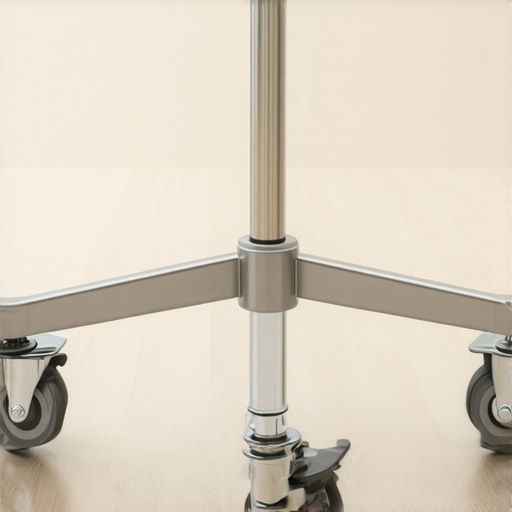
Not all casters are created equal. A stand that rolls beautifully on a smooth showroom floor might catch and stutter on the high-friction antimicrobial flooring of a modern surgical suite. This sudden ‘catch’ is what tips the tray. When you are looking for overbed tables that won’t tip over, you look for low-profile casters with sealed bearings. Do the same for your Mayo stands. Sealed bearings prevent hair, lint, and floor wax from gumming up the works, which is essential for maintaining a sterile environment. It’s a key part of our top medical supplies every healthcare provider should stock in 2025 list.
Run the Full Load Stability Drill
The best way to know if a piece of equipment is reliable is to push it to its limit in a controlled setting. I make it a rule to load every new stand with 50% more weight than I expect to use. During one of these tests, a ‘premium’ stand’s tray actually started to bend at the weld points. It looked fine in the brochure, but the gauge of the stainless steel was too thin. This is the same level of scrutiny you should apply when you pick lab centrifuges that don’t shake your entire countertop. If it vibrates or flexes during a dry run, it will fail you when a surgeon is leaning on it to reach a deep cavity.
Efficiency in the OR often comes down to the gear you don’t have to think about. When you optimize medical supplies inventory for better efficiency, you aren’t just counting boxes; you are vetting the hardware that supports your staff. A stand that stays exactly where you put it, at the height you set, allows the team to focus on the patient, not the floor.
Most clinicians believe that if an item is labeled ‘surgical grade stainless steel,’ it is essentially immortal. This is the biggest myth in medical procurement. In my experience, ‘stainless’ is a relative term, not a guarantee. I’ve seen high-end Mayo stands develop pitting and corrosion within months because the manufacturer skipped the passivation process—a chemical treatment that maximizes the protective oxide layer on the steel. When you are looking for affordable medical devices that don’t compromise on quality, you have to ask about the finishing process, not just the alloy type.
Stop trusting the ‘medical grade’ label blindly
The ‘oops’ factor usually happens in the sterile processing department. We often buy the most expensive gear and then treat it with generic, high-pH detergents that eat away at the internal lubricants of our stands and carts. It’s a common trap: thinking that more aggressive cleaning equals a safer environment. In reality, the latest medical equipment technologies transforming hospitals often require more delicate care than the archaic gear they replace. I once saw a fleet of automated carts fail because the wheels were ‘sanitized’ with a chemical that melted the high-friction coating. Have you ever fallen into this trap? Let me know in the comments.

Will more features actually increase your failure rate?
It’s tempting to go for the stand with the foot-pedal hydraulic lift or the integrated digital scale. However, every moving part is a future point of failure. According to a study published by the Association of periOperative Registered Nurses (AORN), mechanical failures in non-electronic equipment are frequently linked to ‘feature creep’—where unnecessary complexity leads to more difficult sterilization and higher maintenance demands. This is why when you upgrading medical equipment, the smartest move is often to choose the most refined version of a simple design. For instance, finding surgical scissors that actually stay sharp after 50 sterilization cycles isn’t about finding the ‘smartest’ pair; it’s about the quality of the tungsten carbide inserts and the precision of the screw joint.
We also need to talk about the hidden cost of ‘cheap’ disposables that pretend to be high-performance. You might think you’re saving the clinic money, but why cheap disposable scalpels are costing your surgery center more than you think usually comes down to tactile feedback and safety. If a blade snaps or a stand wobbles, the cost of that single incident outweighs a decade of savings. Real expertise means knowing that your essential guide to choosing reliable medical devices for clinics should prioritize mechanical tolerances over flashy marketing specs. If the wheelbase doesn’t feel like it’s carved from a single block of granite, it doesn’t belong in your OR.
Most clinics treat maintenance as a reaction to a breakdown, but that is a recipe for surgical delays and expensive repairs. I swear by a ‘Quarterly Torque Audit.’ Every three months, we take a calibrated hex key to every joint on our mobile stands. According to technical bulletins from the Healthcare Sterile Processing Association (HSPA), over 40% of mechanical failures in mobile medical hardware could be prevented by simply verifying the tightness of structural fasteners before they vibrate loose. If you aren’t doing this, you are just waiting for a tray to tip. This proactive approach is a cornerstone when you are upgrading medical equipment because it protects your investment from the day it arrives.
How do I keep my surgical hardware functioning like new for a decade?
It’s about the ‘dry-film’ lubrication. We often think oil is the answer, but in a sterile environment, oil is a magnet for bioburden. I only use medical-grade silicone or ‘milk’ baths that are steam-permeable. This ensures that the friction-lock on your Mayo stand or the hinges on your surgical forceps that don’t lose their grip after sterilization don’t seize up after the hundredth cycle. It’s a detail most people miss, but it’s why my gear looks and feels brand new ten years later. 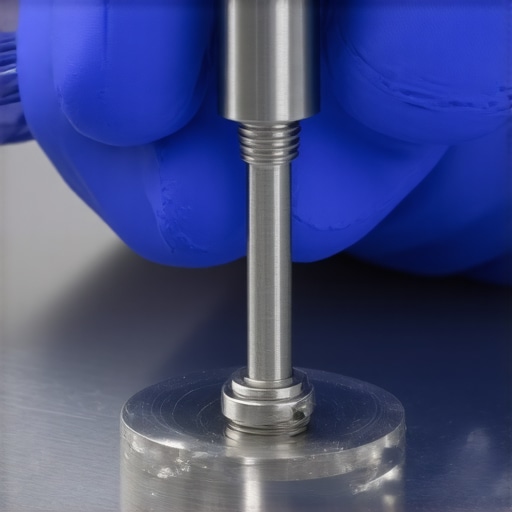 Beyond the stands themselves, you have to look at the surrounding fleet. I’ve transitioned our unit to infusion pump stands that won’t wobble during emergency transport because they share the same low-center-of-gravity engineering as the best Mayo stands. When you optimize medical supplies inventory for better efficiency, standardization is your best friend. If every mobile unit uses the same 3-inch sealed polyurethane casters, your maintenance kit shrinks, and your reliability sky-rockets. Looking ahead, I predict that the medical devices innovation future trends to watch in 2025 will move away from manual checks entirely. We are already seeing prototypes of ‘smart’ stands equipped with load sensors and Bluetooth-enabled maintenance logs. Imagine a stand that pings your phone when the internal bushing starts to wear down or if the weight distribution becomes unsafe. It’s the next logical step in the latest medical equipment technologies transforming hospitals. For now, though, I want you to try this: go to your equipment room tomorrow, grab your heaviest Mayo stand, and check the bolt at the base. If it moves even a millimeter, you’ve just found your first project.
The Real Cost of a Three-Second Equipment Failure
After years in the OR, I’ve realized that the most expensive piece of gear isn’t always the high-end robotic laser; it’s the mid-range stand that fails at 2:00 AM. When I am upgrading medical equipment, I now look for ‘over-engineered’ simplicity. My biggest lightbulb moment was realizing that a stand’s stability is directly proportional to how much the surgical team trusts their workflow. If you are constantly glancing at the tray to make sure it hasn’t drifted, you aren’t focused on the patient. Always remember that ‘medical grade’ is the floor, not the ceiling, of quality. Don’t be afraid to demand better tolerances from your suppliers.
My Go-To Manuals for Equipment Longevity
To keep my clinic running like a Swiss watch, I don’t rely on luck or manufacturer promises. I keep the AORN Guidelines for Perioperative Practice within reach at all times—it is the gold standard for maintaining a sterile environment and vetting hardware durability. I also regularly check the ECRI Institute’s safety alerts for affordable medical devices that don’t compromise on quality to see which brands are actually holding up under the rigors of high-volume surgery. For my team, we’ve also integrated the use of sterile field barriers that actually stay in place to complement our hardware choices. These resources have saved me more headaches than any glossy sales brochure ever could.
#IMAGE_PLACEHOLDER_E#
Take Control of Your Surgical Environment Before the Next Case
Choosing the right hardware isn’t just an administrative task; it is a clinical safety measure. Whether you are looking for heavy duty IV poles for 2026 emergency rooms or simply trying to fix a wobbly Mayo stand, your attention to detail protects the sterile field and your team’s sanity. High-quality medical equipment should be invisible during a procedure because it performs exactly as expected every single time. Go back to your unit, perform that shake test I mentioned earlier, and don’t settle for gear that puts your patients at risk. You deserve equipment that works as hard as you do.
Have you ever had a piece of equipment fail during a critical moment because of a loose bolt or a bad caster? Let me know in the comments below—I’d love to hear how you handled the situation.