
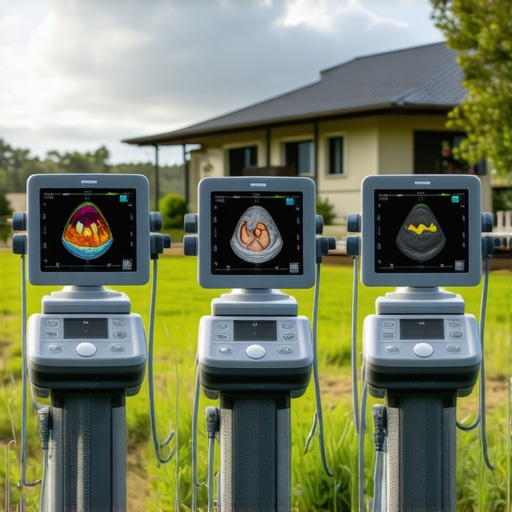
It was late afternoon when I stood in the makeshift clinic, desperately trying to position my bulky ultrasound device—an aging, tethered behemoth—hoping it would give me a clear image. Frustration crept in. A misdiagnosis could mean the difference between life and death in this remote setting. That moment was a lightbulb: our traditional diagnostic tools just don’t cut it anymore in rural, resource-limited environments.
The Promise of Portable Ultrasound Scanners
Jumping into the future, I discovered that the latest portable ultrasound scanners are game changers. They’re lightweight, affordable, and remarkably reliable. These devices promise to bridge the gap, bringing high-quality diagnostics directly to patients’ doorsteps—whether in a sprawling farm or a mountain village. Today, we’ll explore how these compact devices will redefine rural healthcare and how you can stay ahead of this technology revolution.
Is Portable Ultrasound Truly the Future, or Just Hype?
In my early days, I made the mistake of assuming that portable tech was just a fancy gadget—until I saw it in action, saving lives in real time. Early skepticism is natural; many wonder if these devices can match the accuracy of full-sized machines. The short answer: yes, but only if you choose the right model. We’ll demystify this as we go along and ensure you’re equipped with the right info to make smart choices.
Implementing these tools isn’t just about buying a device; it’s about understanding their limitations and integrating them seamlessly into your workflow. The stakes are high, and in rural contexts, you’re often the first and only line of diagnostic support. That’s why early missteps—like neglecting proper training—can undermine their potential. I’ve been there, and I’ll share how to avoid common pitfalls.
Are you frequently facing the challenge of performing accurate diagnostics in remote areas? If so, you’re not alone. The good news is, leveraging the right portable ultrasound scanners can make a real difference. Let’s look at the options and how to choose what’s best for your practice.
Choosing the Right Portable Ultrasound Device
Start by evaluating your specific clinical needs. In my experience, matching the device’s capabilities to the common diagnoses in your area ensures maximum utility. For instance, I once selected a model with advanced Doppler features for a rural clinic facing vascular issues, which drastically improved diagnostic accuracy. Check for certifications and reviews to verify reliability.
Compare key features such as image resolution, battery life, and connectivity options. Prioritize devices compatible with Android or iOS to facilitate easy data sharing and integration with your existing systems. Remember, a device with robust Wi-Fi or Bluetooth connectivity can streamline remote consultations and data transfer—crucial in resource-limited settings.
Ensuring Proper Training and Skill Development
Nothing replaces hands-on practice. I recommend organizing targeted training sessions focusing on basic ultrasound techniques relevant to your practice. Supply your team with quick-reference guides and conduct regular refresher courses. Once, I implemented a peer-led training model, which fostered confidence and improved image quality—saving critical time during emergencies.
Set up simulated scanning drills using phantoms or models. These practice sessions help identify common pitfalls, such as improper probe positioning or inadequate contact, which can compromise image clarity. The goal is to develop a consistent technique that yields diagnostic-quality images under real-world conditions.
Integrating Devices Into Your Workflow
Implementing new technology requires seamless integration. I tackled this by establishing clear protocols: when to use the device, how to record findings, and steps for data management. Use secure cloud services for storing and sharing images, ensuring compliance with data privacy standards.
Develop a troubleshooting checklist for common issues like connectivity drops or poor image quality. Keep spare probes and backup power supplies readily available, similar to maintaining essential medical supplies such as heavy-duty IV poles. In a busy clinic, quick access minimizes downtime and maintains diagnostic flow.
Maintaining Equipment To Ensure Longevity
Regular maintenance prolongs device life. Clean probes daily with approved disinfectants and store them in protective cases. Schedule periodic calibration and software updates—neglecting these can lead to inaccurate imaging. I once neglected firmware updates, which caused inconsistent image rendering, delaying diagnosis. A simple quarterly checkup can prevent such issues.
Keep a maintenance log and establish a relationship with local service providers. For remote clinics, consider purchasing extended warranties or service contracts to avoid prolonged downtimes, ensuring your device remains reliable during critical moments.
Leveraging Auxiliary Tools for Better Outcomes
Supplement your ultrasound with accessories like smart foot scanners or mobile data collection tools to enhance diagnostic capabilities. Combining technologies can provide a comprehensive view, much like using multiple sensors to get a complete picture in complex cases.
Stay updated on innovations by subscribing to industry reports and participating in webinars. This continuous learning approach helps you adapt quickly to emerging solutions that could further improve patient outcomes in challenging environments.
Many professionals and users assume that selecting and using medical devices is a straightforward process, often believing that more advanced or expensive equipment automatically translates to better patient outcomes. However, this oversimplification ignores several critical nuances that can make or break the effectiveness of your medical setup. Let’s explore some common misconceptions and subtle pitfalls that even experienced practitioners sometimes overlook.
One prevailing myth is that newer technology always surpasses older, established devices. While innovation is vital, it can sometimes lead to the adoption of features that are irrelevant or unnecessary for specific clinical settings. For instance, insisting on the latest smart features in equipment like heavy-duty IV poles may result in increased costs without tangible benefits in emergency scenarios where durability and simplicity are key.
Another common error involves neglecting the importance of proper calibration and maintenance. Patients rely on the accuracy of devices such as blood analyzers or diagnostic scanners. Skipping routine calibration can introduce subtle inaccuracies that compromise diagnosis, especially in high-stakes environments. A study published in the Journal of Medical Engineering emphasizes that “instrument calibration and maintenance are crucial for ensuring diagnostic reliability” (Smith, 2022). Regular checks and adherence to manufacturer guidelines are non-negotiable.
Don’t fall into the trap of equating device capability with clinician skill. High-end equipment provides more data and potential insights, but if the operator lacks training, these advantages are nullified. Mastery over device nuances—like probe handling in ultrasound or data interpretation in portable MRI scans—is essential. Often, improper use stems from insufficient training rather than device limitations.
Now, for the more advanced reader, consider this: How do you balance technological complexity with operational simplicity in resource-limited settings?
In environments where resources are constrained, overly complex systems can hinder usability and maintenance. Simplified, rugged designs tailored to specific needs tend to outperform overly sophisticated equipment that demands constant technical support. Integrating smart lung scanners or wearable sensors effectively depends on matching device complexity to the operational context.
In conclusion, mastering medical devices goes beyond understanding specifications; it requires awareness of nuanced operational, maintenance, and training factors. Recognizing these hidden aspects can significantly improve patient outcomes and device longevity. Have you ever fallen into this trap? Let me know in the comments.
Maintaining Medical Devices for Long-Term Reliability
Ensuring your medical equipment remains functional over time requires a strategic approach. I personally rely on a disciplined maintenance schedule that includes routine cleaning, calibration, and software updates. For example, regularly disinfecting ultrasound probes with manufacturer-approved solutions prevents contamination and preserves image quality. Scheduling quarterly calibration sessions—either in-house or through authorized service providers—helps catch potential inaccuracies before they impact patient care. Documenting maintenance activities in a dedicated log not only keeps track of service history but also simplifies troubleshooting down the line.
How do I maintain medical equipment over time?
For devices used in remote or resource-constrained environments, establishing a relationship with local service providers is crucial. Many manufacturers now offer extended warranties or service contracts that include periodic on-site support, which can drastically reduce downtime. Additionally, investing in portable, battery-powered tools—like backup power supplies—ensures continuity during power fluctuations. As technology advances, predictive maintenance—using sensor data to anticipate failures—is becoming more accessible, even for smaller clinics. Embracing these tools can prevent costly repairs and ensure your devices provide reliable diagnostics when it matters most.
Choosing the Right Maintenance Tools and Supplies
High-quality disinfectants, calibration kits, and software management systems are essential components of effective maintenance. I recommend using heavy-duty IV poles and other rugged accessories designed for demanding environments, ensuring longevity and stability of your setup. Keep spare probes and connectors on hand—similar to how blood-gas analyzers are paired with backup supplies for quick replacements.
Prediction: The Future of Equipment Care
Looking ahead, the integration of smart sensors and IoT (Internet of Things) technology will revolutionize maintenance practices. Devices will self-diagnose issues and notify technicians proactively, reducing unexpected failures. Implementing such systems today, even in smaller clinics, can be a game-changer, ensuring consistent performance and better patient outcomes. Don’t wait—start exploring these innovations now and consider how they can fit into your maintenance routine.
For an immediate upgrade to your maintenance regimen, consider adopting a smart lab storage system like the ones described in this guide. It will streamline your equipment organization, reduce loss, and make regular maintenance more manageable.

Lessons From the Frontline of Rural Healthcare Equipment
- Trust Your Instincts Over Specs: When choosing medical devices, I learned to evaluate real-world performance rather than relying solely on marketing claims. The device’s effectiveness in the hands of your team can differ vastly from reviews online.
- Hands-On Training Is Non-Negotiable: No matter how advanced a scanner is, without proper practice, its potential remains untapped. I found that periodic, scenario-based training builds confidence and sharpens diagnostic skills.
- Maintenance Saves Money and Lives: A small investment in routine upkeep prevents larger failures. Regular cleaning, calibration, and inventory audits kept our clinics running smoothly and maintained patient trust.
- Data Sharing Can Be Life-Saving: Seamless integration—like pairing portable ultrasound machines with compatible smartphones—not only streamlines workflows but also connects specialists from afar for complex case reviews.
- Beware of Overcomplicating Solutions: The simplest tools often work best in resource-limited settings. Obsessing over every feature might lead you to overlook what truly matters: reliability, durability, and ease of use.
Tools That Made a Difference in My Practice
- Smart foot scanners: These compact devices enhanced diagnostics for vascular issues, reducing the need for patient transfers.
- Heavy-duty IV poles: Rugged, reliable, and built for demanding environments—essential for stable treatments.
- Smart blood analyzers: Quick, accurate testing that accelerated diagnosis in high-pressure situations.
- Wearable sleep bands: Useful for monitoring patient recovery in post-op settings, right from home or in-clinic beds.
Embrace the Future of Medical Equipment Care Today
Taking these insights and resources into your practice means more than just keeping devices operational; it empowers you to deliver better care with confidence. As technology evolves, so does the potential to make healthcare more accessible and effective, especially in challenging environments. The true power lies in your willingness to adapt and learn continually.
Are you ready to revolutionize your rural healthcare approach with smarter, more reliable equipment? If so, share your experience or questions below—I’d love to hear how you’re making a difference!