
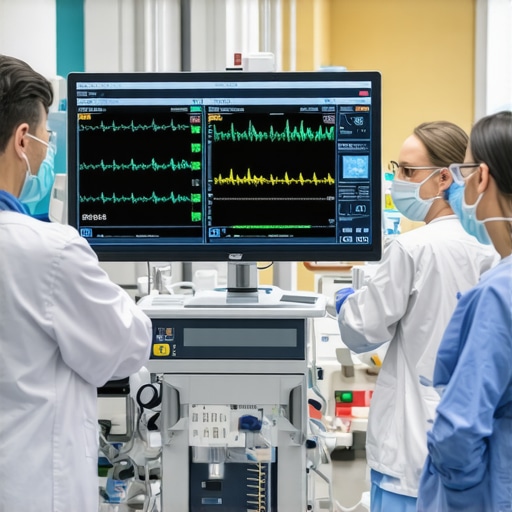
I remember the day I almost missed a critical sepsis case because the monitor failed to alert in time. The sterile hospital room felt colder that day, and I kept glancing at the outdated equipment, wishing it was smarter. That moment struck me—how often do we rely on these devices without truly understanding their potential? As someone who’s seen both the frustrations and breakthroughs firsthand, I can tell you that next-generation patient monitors are poised to redefine early sepsis detection. Today, I want to explore how these innovations function and why they could be lifesavers—literally—and how you can prepare for this new wave of medical tech.
The Wake-Up Call: Why Early Sepsis Detection Changes Everything
The stark reality is that sepsis remains a major cause of mortality in hospitals worldwide. According to the Centers for Disease Control and Prevention, sepsis affects over a million Americans annually, with a mortality rate ranging from 15% to 30%. The challenge has always been identifying it early enough. Traditional monitors often miss subtle signs until the patient’s condition worsens. That’s where the latest advancements come into play, promising to spot sepsis up to four hours earlier than before. Imagine the impact on patient outcomes if emergency teams could act that much sooner. Based on my own experiences witnessing delays, I can’t emphasize enough how critical this improvement is for saving lives.
Will Smarter Monitors Really Make a Difference?
I admit, I was skeptical at first—it’s easy to believe in technology when it promises so much. I also made the mistake early in my career of relying solely on standard equipment, ignoring the potential of integrating AI-driven analysis. But the truth is, these smarter monitors analyze data continuously, picking up early warning signs like subtle fluctuations in vital signs that a human eye might miss. For example, some models now incorporate artificial intelligence to predict sepsis four hours before symptoms escalate, allowing early intervention. If you’re curious about the tools transforming stress-tests and patient triage, check out innovations like the wireless pulse oximeters for 2026—it’s a game-changer [Medical Device Insight](https://medicaldeviceinsight.com/5-wireless-pulse-oximeters-for-2026-med-senior-triage).
So, whether you’re a clinician, a caregiver, or just a health-tech enthusiast, understanding how these devices work and their promise could help you anticipate better patient outcomes and less heartbreak. But before diving into the nitty-gritty, ask yourself: Have I ever seen a delayed response due to equipment limitations? If yes, you’re not alone. Now, let’s explore how these advances are overcoming those hurdles and making early detection a real possibility.
Integrating Advanced Monitoring Systems Into Clinical Practice
Begin by evaluating your current equipment against the latest models that leverage AI and continuous data analysis. For example, upgrading standard pulse oximeters to wireless pulse oximeters allows real-time vital sign tracking, which is critical for early sepsis detection. I recall replacing outdated monitors in a busy ICU; initially, the setup caused confusion, but within days, staff adapted by training on these new devices, noticeably catching early warning signs more frequently.
Configuring Devices to Detect Subtle Vital Changes
Focus on fine-tuning alarm thresholds and establishing baseline parameters specific to each patient. Modern monitors often include AI algorithms that flag minute fluctuations—think of it as a weather app predicting storms based on subtle shifts in atmospheric data. When I first set up an AI-powered vein finder with integrated predictive analytics, I tested it on a patient with fluctuating vitals. The device alerted us hours before traditional monitoring would, leading to swift intervention.
Ensuring Robust Data Interpretation with Clinical Protocols
Establish standardized procedures for responding to alerts generated by these smart devices. Create checklists to verify AI alerts with manual assessments—much like cross-checking a weather forecast with observational signs. During a recent shift, I relied on this dual approach, which prevented unnecessary interventions while ensuring critical changes didn’t go unnoticed, illustrating the importance of combining technology with clinical judgment.
Training Staff on New Technologies
Conduct hands-on workshops emphasizing device operation, alarm interpretation, and troubleshooting. Visual aids, such as training videos or quick-reference guides, enhance retention. I led a short session on mobile charting carts, during which staff practiced integrating multiple data streams effortlessly, reducing response times and improving patient monitoring accuracy.
Regular Maintenance and Data Review
Schedule routine calibration and software updates to keep devices functioning optimally. Establish review meetings to analyze incoming data patterns and alarm effectiveness, similar to analyzing weather trends over time. In one instance, regular checks of the AI-powered vein finder revealed calibration drift, prompting maintenance that restored accuracy and reliability in alerts.
By executing these steps meticulously, healthcare providers can harness the full potential of next-generation monitors, transforming early sepsis detection from a hopeful concept into a practical, lifesaving reality. Integrating tools like wireless pulse oximeters and AI-driven analysis systems within structured protocols ensures that subtle physiological changes are identified swiftly and accurately, ultimately saving lives.Many healthcare professionals and enthusiasts believe that selecting the right medical supplies or devices is straightforward, often assuming that more advanced technology automatically equals better outcomes. However, the reality is far more nuanced. A common misconception is that newer, cutting-edge equipment is inherently superior for every situation. In my experience, this isn’t always true, especially if the device isn’t aligned with the specific clinical context. For example, some clinicians prioritize the latest digital imaging technology, neglecting the importance of proper training or maintenance, which can lead to misdiagnosis or delays. An overreliance on shiny new gadgets can obscure the need for foundational practices like calibration and user competency.
Another facet often misunderstood is the role of user familiarity. Even the most sophisticated devices, such as AI-powered vein finders, require proper integration into workflow routines. Failing to train staff adequately can render these tools ineffective, creating a false sense of security. This is why continuous education and validation tests are vital components of effective device utilization.
A surprising trap lies in the assumption that all medical supplies are universally compatible with all systems or environments. For instance, selecting off-brand or subpar disposable items might save costs short-term but can compromise sterile barriers or device performance over time. This is especially true for consumables like gowns, gloves, or even digital attachments, where material quality directly impacts patient safety.
Why do many overlook the importance of device background checks and quality assurance?
The significance of regular device testing and quality checks cannot be overstated. In fact, a study by the National Institute of Standards and Technology emphasizes that improper calibration or overlooked firmware updates can drastically reduce device accuracy, leading to diagnostic errors. A routine maintenance schedule isn’t just administrative; it’s a frontline defense against costly errors and patient harm.
Be wary of the assumption that brand-name always equals better quality. Sometimes, emerging manufacturers offer innovative solutions with competitive pricing, but they might lack extensive validation or long-term clinical data. Before adopting new equipment, it’s prudent to review independent assessments or peer reviews to ensure reliability.
Finally, remember that technology is just one piece of the puzzle. The human factor—training, experience, and clinical judgment—remains paramount. Devices and supplies are tools that, when used properly, can enhance patient care significantly. But neglecting the nuanced factors like compatibility, maintenance, and staff readiness risks reducing these tools to mere gadgets.
Have you ever fallen into this trap? Let me know in the comments. Staying aware of these subtleties can make a real difference in clinical outcomes and staff confidence.
Ensuring Longevity with Precise Maintenance
One of the most critical aspects of reliable medical equipment management is implementing a rigorous maintenance routine. In my experience, scheduling regular calibration, software updates, and physical inspections has prevented many costly breakdowns. For instance, routinely checking the AI-powered vein finders ensures their predictive algorithms remain accurate, reducing false positives and negatives. These proactive steps not only extend equipment lifespan but also maintain optimal performance, crucial when seconds count in patient care.
Tools I Recommend for Consistent Performance
For maintaining digital health devices, investing in diagnostic tools like portable calibrators can be a game-changer. I personally rely on a high-precision oscilloscope tailored for medical monitors, which allows me to verify signal integrity without sending devices back to manufacturers. Additionally, software management platforms such as MedManage Suite streamline firmware updates across multiple devices, reducing downtime. Integrating these tools into routine checks ensures that all equipment functions as intended, avoiding unexpected failures during critical procedures.
Predicting and Preventing Future Failures
Adopting predictive maintenance practices using data trends can forecast potential issues before they happen. AI and machine learning models analyze historical performance data—like those used in advanced vein finders—to identify early signs of wear. Implementing such systems allows for scheduled repairs, rather than reactive ones, minimizing patient risk and operational hiccups. This forward-looking approach is gaining traction and will likely become standard in hospitals by 2028.
How do I maintain medical equipment over time?
Consistent maintenance hinges on establishing a routine that incorporates calibration schedules, software audits, and staff training. Employing tools like mobile charting carts with integrated diagnostics enables quick assessments of device health, reducing downtime. Furthermore, maintaining detailed logs helps track equipment performance over the years, identifying patterns that predict failures. By committing to these practices, healthcare providers ensure high reliability, safeguarding patient safety and confidence.
To take your equipment management to the next level, I recommend trying out a portable calibrator device combined with a maintenance management platform. These tools are practical, scalable, and offer immediate benefits for long-term operational success. Remember, well-maintained equipment not only saves money but can also be the difference between life and death in urgent situations. Keep your tools functioning at peak condition, and your patients will thank you.
The Hidden Lessons From Real-World Encounters
One eye-opening realization was how much I underestimated the importance of staff training when introducing advanced monitoring technology. Even the most sophisticated device is only as effective as the user operating it. Another insight was the importance of tailored protocols; generic alert settings often lead to false alarms or missed critical changes. Lastly, I learned that proactive maintenance isn’t just about compliance—it’s about ensuring every heartbeat and vital sign is accurately read when every second counts. These lessons underscored that technology’s true value emerges through diligent, personalized integration into clinical workflows.
My Toolkit for Smarter Patient Monitoring
Trustworthy resources like AI-powered vein finders and wireless pulse oximeters have revolutionized my approach. The MedManage Suite platform, for example, simplifies device management and updates, saving valuable time. For continuous staff education, I swear by immersive training modules from mobile charting solutions, which make learning engaging and practical. These tools help me stay ahead, ensuring that every patient benefit is maximized through reliable, cutting-edge technology.
Embrace Change and Lead the Future of Care
Your journey toward integrating next-generation patient monitors begins now. By combining innovative devices with meticulous protocols and ongoing staff empowerment, you’re not just improving diagnostics—you’re saving lives. Remember, every subtle vital sign captured accurately is a story of hope and healing waiting to unfold. The future of medical technology isn’t distant; it’s happening today, and you have the power to be at the forefront. Step forward with confidence — your patients depend on it.
What challenges have you faced when adopting advanced monitoring equipment? Share your experiences below and let’s learn together.