
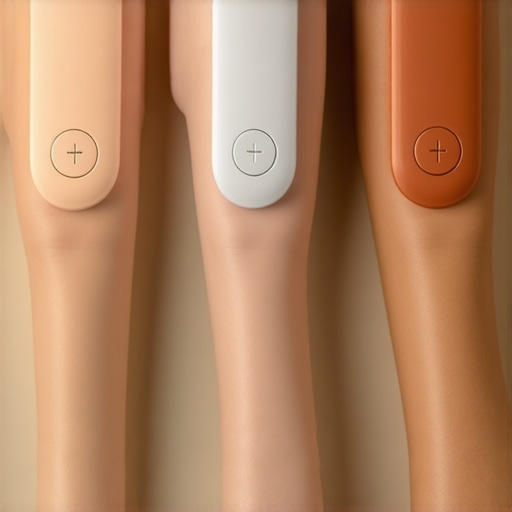
It was a hectic afternoon in the clinic when I realized I was about to face one of my biggest hurdles yet—finding a vein in a tiny, trembling arm. Despite all my experience, the usual techniques failed, leading to frustration on both ends. That moment was a lightbulb realization: traditional methods just aren’t enough for the delicate needs of pediatric patients anymore.
Why Accurate Vein Detection Matters More Than Ever
In pediatric care, especially with young children, locating veins can feel like searching for a needle in a haystack. Poor access not only prolongs the procedure but also increases discomfort and anxiety for the little patients—and trust me, I’ve seen firsthand how a failed attempt can shake a child’s confidence in healthcare.
This is where the latest advancements in handheld vein locators can truly make a difference. By 2026, these devices are expected to become standard tools in pediatric settings, offering enhanced accuracy and speed. Early in my career, I underestimated these tools, relying solely on palpation, which led to multiple sticks and failed attempts. My mistake was ignoring emerging technology that could dramatically improve patient experience.
Are you tired of the same struggles with vein access? Do you worry that your current methods aren’t enough in complex pediatric cases? If so, you’re not alone. Many healthcare professionals have faced the same frustrations, but there’s promising news on the horizon.
According to research published in the Journal of Pediatric Nursing, advanced vein locating devices can improve success rates significantly, reducing the number of needle sticks and associated trauma. Embracing new tech is not about replacing skill—it’s about augmenting it.
Next, let’s look at what makes these handheld vein locators for 2026 stand out and how they can transform your pediatric practice.
Prepare Your Equipment Carefully
Before starting, ensure your handheld vein locator is fully charged and calibrated according to the manufacturer’s instructions. Trust me, a sudden device malfunction during a procedure can turn an easy stick into a stressful ordeal. Practice calibration on a phantom model or a silicone finger trainer to familiarize yourself with the interface. For a highly realistic practice tool, consider exploring silicone finger trainers. This preparation minimizes surprises when the clinical moment arrives.
Identify the Optimal Insertion Site
Use your device to scan the child’s arm, focusing on areas with recent warmth or visible vessel patterns. Think of the vein locator as the ‘X-ray’ of veins—its real-time imaging highlights the path beneath the skin. Aim for a straight, close-to-surface vein—this reduces the risk of complications. Tap the device lightly to refine your view; some models have depth indicators that show how deep the vessel is.
Positioning and Stabilization
Proper positioning is crucial. Secure the child’s limb in a comfortable, stable position, perhaps with a rolled towel under the arm. Use gentle stabilization with your non-dominant hand, while your dominant hand holds the device. This dual approach prevents movement that could complicate vessel localization, especially in restless young patients.
Marking and Confirming the Ideal Spot
Once the device identifies a suitable vessel, use a skin-marking pen to mark the entry point. Re-scan to confirm the vessel’s course and size, adjusting your mark if needed. It’s better to double-check than to commit prematurely. During my practice, I found that re-verifying with the device reduced unsuccessful attempts, especially in small calves like in infants.
Applying the Technique for Puncture
Prepare your needle and tray, ensuring everything is within easy reach. Stabilize the limb, align the needle with the vessel’s path, and insert at a shallow angle—about 15 to 30 degrees. Be mindful that vessels may shift slightly with limb movement, so real-time device feedback is invaluable. As I advanced the needle while watching the locator’s indicators, success came quicker and with less trauma, even on the tiniest veins.
Special Considerations for Complex Cases
In cases where veins are elusive—like in dehydrated children or those with difficult anatomy—consider leveraging the device’s depth-adjustment features or combining with other visual cues such as skin translucency. Some models also offer thermal imaging to highlight warmer blood-filled vessels, mimicking the benefits seen with traditional ultrasound. Familiarize yourself with these features through detailed device tutorials, possibly found at wireless EEG headsets article, which shares insights into advanced imaging integration.
Practice and Reflection
Consistent practice enhances your skill. Incorporate these tools into regular training with simulation models, gradually increasing complexity. Document your success rate and note any challenges faced, adjusting your technique accordingly. Engaging with colleagues to share tips can also improve overall success. Remember, mastering these tools isn’t an overnight feat but a step-by-step process—think of it as lifting weights: small, repeated efforts lead to strength over time. For additional training resources, check out silicone finger trainers or similar simulation aids.Many healthcare professionals operate under misconceptions about medical supplies and devices that can lead to costly mistakes. One prevalent myth is that all medical-grade equipment is universally interchangeable; however, different models and brands are often designed with specific clinical needs in mind, making compatibility and suitability critical considerations. Relying on a one-size-fits-all approach ignores nuanced differences that can impact patient safety and procedure success. For instance, choosing generic thermometers over those calibrated for pediatric use might yield inaccurate readings, potentially leading to misdiagnoses. Always verify that your instruments meet the specific standards for your practice area, and stay updated on the latest technological advancements to ensure optimal outcomes.
Are Cheaper Alternatives Truly Just as Effective in Medical Settings?
A common misconception is that lower-cost supplies and devices are equivalent to their premium counterparts. While budget-friendly options can be tempting, especially when procurement budgets are tight, they may compromise on durability, accuracy, or sterility, risking patient safety. Studies published in the Journal of Hospital Medicine suggest that investing in reliable, high-quality equipment reduces long-term costs associated with device failure or patient complications. For example, digital thermometers designed specifically for pediatric clinics often incorporate advanced sensors and calibration features that generic models lack, emphasizing the importance of choosing appropriate tools for your clinical setting. Remember, the goal is to balance cost with performance, ensuring safety without overspending.
Another nuance often overlooked involves the maintenance and lifespan of medical supplies. Many assume that sterilization processes like autoclaving preserve all equipment equally, but some materials degrade under repeated sterilizations, leading to compromised integrity and increased infection risk. Being aware of the recommended sterilization cycles for each device is essential—ignoring these can have serious repercussions. Regularly reviewing manufacturer guidelines and staying informed about material technologies can help you make smarter, safer choices.
Finally, consider the evolving standards and certifications that define quality in medical supplies. Relying solely on outdated certifications or fads can be dangerous; instead, consult current regulatory approvals and peer-reviewed research. This approach ensures that your equipment aligns with the latest safety protocols and technological innovations. For continued learning, exploring resources such as the latest training aids and device updates can keep you ahead of common pitfalls.
Having a nuanced understanding of medical supplies prevents costly errors and enhances patient trust. Do you know of any misconceptions that commonly trip up healthcare providers? Share your experiences in the comments!Maintaining the effectiveness of your medical supplies and devices is crucial for patient safety and operational efficiency. One of my go-to strategies involves adopting high-quality, durable tools like silicone finger trainers, which I personally use for hand rehabilitation exercises. These trainers, available through detailed guides at Silicone Finger Trainers for 2026, help keep patient hand therapy equipment in optimal condition with minimal wear. Regular calibration and cleaning, especially for digital thermometers like those reviewed in Digital Thermometers for Pediatric Clinics, extend device lifespan and ensure accurate readings over time. Tools like wireless EEG headsets or handheld vein locators also require routine firmware updates; manufacturer instructions often recommend quarterly checks, which prevent glitches during critical procedures. Predicting future trends, I believe smart, IoT-enabled devices will dominate pediatric and critical care settings, enabling telemaintenance and predictive analytics. So, how do I maintain my equipment over time? I prioritize scheduled preventive maintenance—set reminders for recalibration, thorough cleaning, and software updates. This practice minimizes unscheduled downtimes and extends device life, ultimately saving costs. If you’ve faced issues with unreliable devices, I recommend trying out resistance bands with integrated force sensors for post-op rehab, detailed at Resistance Bands for 2026. Incorporate these into your routine, and you’ll notice improved longevity and performance. Remember, investing a bit of time in regular maintenance and using superior tools not only benefits your practice but also enhances patient outcomes and safety.
Lessons That Changed My Approach to Pediatric Vein Finding
One of the most profound lessons I learned is that embracing innovative tools isn’t a sign of weakness but a commitment to patient comfort and success. Traditional palpation methods, while valuable, often fall short in tiny, fragile veins, leading to repeated sticks and distress. The moment I realized that handheld vein locators could dramatically increase success rates transformed my entire practice.
Another insight I gained is that every device has a learning curve. Investing time in practicing calibration and familiarization with the latest vein detection technology pays dividends in real clinical scenarios, reducing stress for both the patient and practitioner.
Lastly, I understood that continuous reflection and adaptation are key. Sharing experiences with colleagues and staying updated on emerging tools empower us to refine techniques, ensuring our little patients receive the best care possible.