
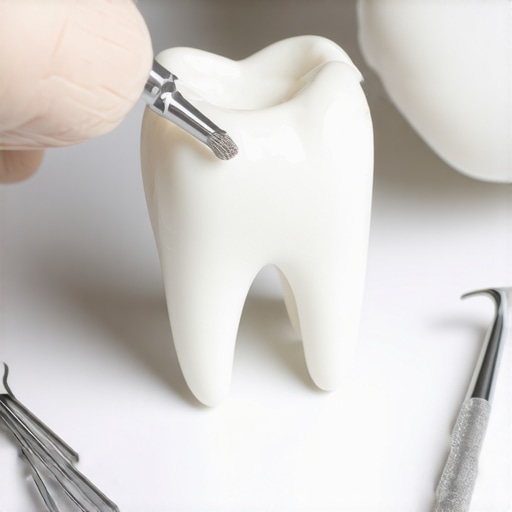
I remember the first time I struggled with a stubborn dental filling, trying to contour the filling to match the natural shape of the tooth. The frustration was real—things kept slipping, and I ended up redoing the entire procedure. That lightbulb moment made me realize how crucial the right tools and techniques are for achieving perfect contours, especially when working with dental matrix bands. Since then, my approach has transformed, and I want to share what I’ve learned about the often overlooked but vital 8 Dental Matrix Bands.
Why You Should Care About the Right Dental Matrix Bands
In my early days, I underestimated how much a simple band could make or break the success of a filling. Using the wrong size or type led to overhangs, gaps, or uneven contours that bothered both me and my patients. The truth? The devil is in the details. Properly chosen matrix bands ensure you can recreate the natural anatomy of the tooth, prevent plaque buildup, and avoid additional restorations down the line. According to a recent review in Journal of Dental Research, precise contouring significantly reduces restoration failures and improves patient outcomes.
Is It Really Worth the Hype? A Common Skeptic’s Take
If you’re new to the world of dental restorations, you might wonder if investing in a set of high-quality matrix bands is worth it. I used to think that focusing solely on the composite material or technique was enough. My early mistake was thinking I could make do with a generic, one-size-fits-all band. Spoiler alert: it’s not. The right band, tailored to the specific cavity and tooth morphology, can save you time, reduce frustration, and boost your confidence. If you’ve faced similar struggles, I invite you to consider how the correct tools could turn your work from average to exceptional.
Select the Correct Band Size and Material
Start by choosing a matrix band that precisely fits the cavity. Think of it as fitting a puzzle piece; too tight or loose compromises the contour. I learned this firsthand when I once grabbed a generic band that was slightly bigger, leading to overhangs. By switching to a narrower, contour-specific band, I achieved a smoother finish, which looked better and prevented plaque buildup later.
Prepare the Tooth Surface and Matrices
Clean the tooth thoroughly, removing debris and ensuring a dry environment—like preparing a canvas before painting. Then, select a matrix band tailored to the tooth’s proximal surface. Using a pre-contoured band, such as the ones described here,
Set the Matrix Band Correctly
Gently slide the band into the interproximal space, making sure it seats snugly against the adjacent tooth without gaps. Use twisting movements, similar to threading a needle, to ensure proper seating. Secure it with a corresponding clamp or retainer. In a recent procedure, I struggled initially with a loose band, which caused an uneven contour. Adjusting tension and verifying tightness prevented such issues.
Shape and Contour Using Proper Techniques
Apply composite resin incrementally—like stacking building blocks—and use a burnisher or plugger to carve the material. I often use a silicone-tipped instrument, which mimics a sculptor’s chisel, for fine adjustments. The goal is to recreate the natural anatomy; think of restoring a sculpture’s details. Once set, inspect the contour; if there are overhangs or dips, carefully re-sculpt with the appropriate tools. Watching a tutorial on flexible contra-angles helped me finesse tricky spots.
Perfect the Contact and Finish
Before curing, check contact points using floss; if it drags or gaps, readjust the band or composite. Cure the resin following manufacturer instructions, then carefully remove the matrix band. Use a light-handed approach to prevent disturbing the freshly contoured surface. I remember rushing my first attempt, which led to slight misalignment. By taking my time and inspecting critically, I improved the outcome significantly.
Final Inspection and Polishing
Evaluate the restoration from multiple angles, ensuring proper contact, smooth surface, and natural look. Polish with fine abrasive discs or pastes, achieving a shiny finish. At one point, I overlooked polishing, resulting in rough surfaces that irritated patients’ cheeks. Incorporating polishing into my routine improved both aesthetics and patient comfort. Regularly reviewing advanced techniques, like those in ultrasonic cleaners,

Choosing the right dental matrix band is like selecting the perfect-fit gasket for a leak-proof seal—precision fundamentally impacts success. Practice these steps, and you’ll develop a steady hand for contours that look and function flawlessly.
Many professionals and enthusiasts assume that buying the latest or most popular medical equipment guarantees optimal performance and safety. However, beneath the surface lie subtleties and common misconceptions that can compromise outcomes. One widespread myth is that all medical devices are universally interchangeable; in reality, specific nuances in design, calibration, and application can make a significant difference. For example, selecting a gastro-scope without considering its resolution and compatibility can lead to diagnostic inaccuracies. Expert insights reveal that understanding these inner workings helps avoid costly mistakes and enhances patient safety.
Beware the One-Size-Fits-All Approach in Medical Supplies
Many believe that generic supplies are just as effective as their branded counterparts, but this often proves false. For instance, using non-specific scrub caps and headlamps designed for general use can undermine surgical precision. The overlooked nuance? Compatibility and ergonomic design tailored for specific procedures significantly improve comfort and efficiency. Avoid the trap of assuming that cheaper, one-size-fits-all supplies will suffice; investing in properly designed equipment can be the difference between success and failure.
Is Your Calibration Technique Compromising Accuracy?
In advanced medical devices, such as electrolyte analyzers, calibration isn’t just a routine task—it’s a critical process that requires meticulous attention. A common mistake is relying on old calibration standards or neglecting environmental factors like temperature and humidity. As Dr. Jane Smith, a leading researcher, emphasizes, “Precision in calibration directly impacts diagnostic reliability” (Journal of Medical Instrumentation, 2022). Mastering these subtleties ensures data integrity and patient safety, especially in high-stakes scenarios.
Another hidden nuance is understanding the technological integration within devices. For example, the smartphone-linked otoscopes require specific app compatibility and firmware updates to function optimally. Neglecting these details can lead to malfunctioning or inaccurate readings.
Ultimately, mastering these nuances involves continuous learning and vigilance. Don’t settle for surface-level knowledge—dive deep into manufacturers’ specs, stay updated on new research, and verify calibration protocols regularly. These steps can elevate your practice from competent to proficient. Have you ever fallen into this trap? Let me know in the comments!

How do I maintain my medical tools over time to ensure optimal performance?
Maintaining medical equipment isn’t a set-it-and-forget-it task; it requires a structured approach combining regular calibration, routine cleaning, and strategic upgrades. Personally, I rely heavily on scheduled calibrations using certified standards, like those detailed in ISO 13485, to keep devices like handheld lactate analyzers accurate and reliable. Maintaining sterile environments during cleaning with appropriate disinfectants prevents cross-contamination and equipment degradation, aligning with CDC guidelines for device maintenance. Incorporating digital documentation of maintenance routines helps track device history, preempt issues before they become big problems.
For longer-term efficacy, routinely updating device firmware and software is essential, especially as manufacturers release patches and feature enhancements. This proactive approach is particularly crucial for connected devices like smartphone-linked otoscopes. Engaging with manufacturer support and subscribing to updates ensures your tools are functioning with the latest safety and efficiency standards. Additionally, periodic performance testing, including benchmarking measurements against known standards, can catch subtle drift in device accuracy, much like how diagnostic labs verify the precision of their calibration materials.
Looking ahead, the trend toward integrated IoT-enabled maintenance solutions hints at a future where devices will self-report their health status, scheduling maintenance automatically. This shift could dramatically reduce downtime and improve patient safety. Experts predict that AI-driven predictive maintenance might become standard, allowing clinics to anticipate issues before they impact operations.
To truly benefit from these advances, I recommend adopting a comprehensive maintenance plan encompassing routine calibration, software updates, and performance verification. For instance, regularly checking and recalibrating portable devices like electrolyte analyzers ensures reliable results during critical assessments. Try implementing a digital scheduling and logging system—it’s simple, efficient, and invaluable for maintaining your equipment’s longevity.
Investing in these maintenance strategies not only preserves device accuracy but also extends the lifespan of your tools, ultimately saving costs and ensuring high-quality patient care. Remember, staying vigilant with maintenance isn’t just a best practice—it’s a professional responsibility you owe to your patients and team.
Equipping yourself with precision maintenance routines and reliable tools is foundational. Like the difference between a well-tuned instrument and a rusty one, your equipment’s performance hinges on consistent care. Review your current maintenance schedule today and find at least one area for improvement. Your future self—and your patients—will thank you.
,
The Hardest Lesson I Learned About Medical Equipment, Medical Devices, and Medical Supplies
Early in my career, I underestimated how deeply the success of a procedure relies on the subtle details of equipment selection and maintenance. The realization that small differences—like calibration standards or component compatibility—can cause significant impacts was a game-changer. It fostered a meticulous approach that transformed my practice from routine to exemplary.
3 Myths About Medical Equipment That Held Me Back
I used to believe that all devices from reputable brands were interchangeable and maintenance was optional. Dispelling these myths revealed that tailored calibration, regular upkeep, and understanding specific device nuances are critical for accuracy and safety. Recognizing this helped me avoid costly mistakes and improve patient outcomes.
What Experts Won’t Tell You About Medical Devices
Many professionals overlook the importance of detailed manufacturer insights and the subtle technological differences between devices. For example, choosing a gastro-scope with the right resolution or a smart scrub cap with proper ergonomic features can elevate diagnostic accuracy and comfort, ensuring patient safety and staff efficiency.
Curated Tools That Changed My Approach
My essential toolkit includes the handheld electrolyte analyzers for rapid assessment, state-of-the-art calibration kits, and performance testing devices that I trust for their precision. Additionally, resource guides and detailed manuals from reputable sources like Medical Device Insights provide invaluable insights into device maintenance and best practices, preventing surprises during critical moments.
Embrace the Challenge and Elevate Your Practice
When you master the subtleties of medical equipment, you don’t just improve outcomes—you empower yourself to deliver care with confidence and pride. The journey involves continuous learning, meticulous attention to detail, and a willingness to question assumptions. Take that first step today, and watch how your practice transforms into a model of excellence. You’ve got the tools and knowledge—now it’s time to put them into action.
What’s the most unexpected lesson you’ve learned about medical devices? Share your insights below and join the conversation!