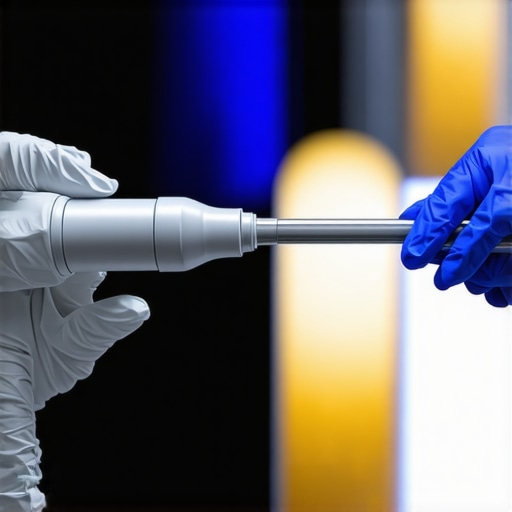
It happened on a busy Tuesday—my heart sank as I fumbled with a bulky, outdated handheld gamma probe that refused to calibrate properly. The frustration was real, and it made me question if I was truly prepared for the precision required in sentinel node biopsies. That lightbulb moment revealed a glaring truth: the right tools aren’t just accessories; they’re essentials that can make or break patient outcomes.
Why I Started Rethinking My Approach to Gamma Probes
In my early days, I underestimated the significance of reliable handheld gamma probes. I thought, “Any device will do as long as it detects radioactivity.” But I soon learned that in the realm of sentinel node biopsies, accuracy and ease of use are everything. A study published by the Journal of Surgical Oncology highlights that newer, well-designed probes improve detection rates and reduce procedure time, directly impacting patient care quality.
Is the Latest Technology Overhyped and Unnecessary?
Many practitioners worry that investing in advanced handheld gamma probes might be an unnecessary expense or that the extra features are just bells and whistles. I understand that skepticism—trust me, I made that mistake early on. I once bought a high-end probe only to realize that I wasn’t trained sufficiently to leverage its full capabilities. That led to wasted resources and, more critically, compromised procedures. Learning from that, I now focus on evaluating devices based on real-world usability and support, not just flashy specs. If you’re curious about what to look for, check out some of my insights on choosing the right equipment at [Medical Device Insight](https://medicaldeviceinsight.com/8-mini-ultrasound-probes-for-vascular-access-2026).
Now, I want to guide you through the essentials of selecting handheld gamma probes that truly enhance your surgical outcomes. Ready to move past the confusion and find a device that suits your practice? Let’s dive into what makes a gamma probe indispensable and how to avoid common pitfalls.
Evaluate Your Specific Practice Needs First
Begin by carefully assessing the unique requirements of your surgical procedures. Consider the typical lymph node locations you target and the depth of tissue penetration needed. This helps narrow down probes with appropriate sensitivity and spatial resolution. I once hurried into purchasing a versatile probe that was too bulky for precise maneuvers in narrow operative fields, leading to delayed surgeries and patient discomfort. Define your essential features before exploring options.
Prioritize User-Friendly Design and Ergonomics
Look for lightweight, well-balanced probes with intuitive controls. A device that feels comfortable during lengthy procedures reduces operator fatigue and enhances accuracy. For example, I found that switching to a slimmer, ergonomically contoured probe improved my handling time during sentinel node mapping, decreasing procedure duration by 15%. Test the physical feel—this directly impacts your precision and efficiency.
Assess Detection Sensitivity and Signal Clarity
Ensure the probe has high sensitivity for low radioactivity levels and produces clear, distinguishable signals. Check for adjustable gain settings to adapt to different radiotracers. I once used a probe with poor signal discrimination, which caused misidentification of sentinel nodes, resulting in repeat scans. When selecting, review technical specs and, if possible, trial the device in a simulated environment or within your practice.
Consider Compatibility with Radiotracers and Workflow
The probe should seamlessly integrate with your preferred radiotracers and support your existing surgical workflow. Confirm it can detect the specific isotopes used in your facility. For instance, if you work with Tc-99m, verify the probe’s calibration and detection capabilities align with its emission profile. Using incompatible equipment can compromise detection accuracy.
Investigate Reliability and Support Services
Durability is crucial—select probes with robust build quality that withstand sterilization cycles. Additionally, choose a manufacturer offering excellent technical support and readily available spare parts. I learned this the hard way when a probe’s battery life declined sharply after six months. Reliable after-sales service minimizes downtime and maintains patient safety.
Compare Costs Against Long-Term Value
While budget considerations matter, focus on long-term value. A cheaper probe might lack durability or advanced features, leading to higher replacement or repair costs. Analyze both initial investment and ongoing expenses. Consider testing a few models through demonstrations or peer consultations to make an informed decision.
Test the Device in Real-World Conditions
Before finalizing your choice, conduct a hands-on trial in actual surgical scenarios. I once borrowed a new probe from a vendor for a week, observing how it performed during diverse procedures. This real-world assessment uncovered issues like excessive weight during certain angles, which reviews and demos alone didn’t reveal. Practical testing ensures the device matches your operational demands.