
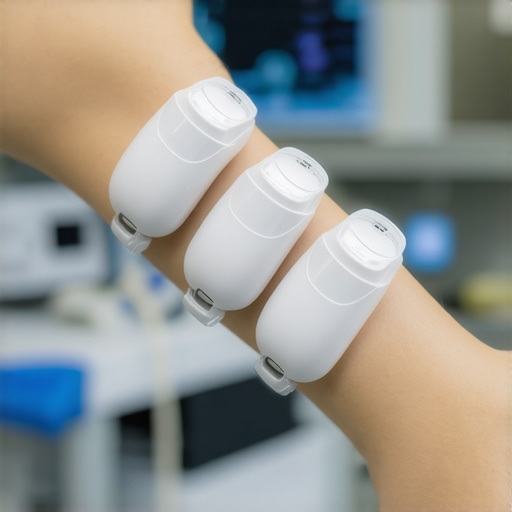
I vividly remember the day I realized how fragile our remote patient monitoring systems truly are. It was a routine check, and suddenly, the vital signs data stopped updating. Panic set in—I was staring at a blank screen of our device, and a wave of helplessness washed over me. That’s when it hit me: even the best medical equipment can falter without reliable sensors. This moment wasn’t just a wake-up call; it was a revelation about the critical role bio-sensors play in patient care, especially from afar.
The Need for Reliable Bio-Sensors in Remote Monitoring
In today’s healthcare landscape, remote patient care isn’t a luxury—it’s a necessity. With the pandemic accelerating telehealth adoption, the demand for seamless, accurate monitoring tools has skyrocketed. But how many of us have faced the frustration of inconsistent data from sensor devices? Mistakes in sensor placement, poor connectivity, or outdated technology can jeopardize patient safety, leading to missed diagnoses or delayed treatment. I’ve been there, fumbling with unreliable monitors, questioning if the investment is worth it.
The good news? Advances in 5 bio-sensors are beginning to close those gaps, making remote care more dependable and, ultimately, safer. These sensors can track vital signs, blood parameters, or even patient movement with unprecedented accuracy, enabling clinicians to make real-time decisions without being physically present. Such innovations promise to shift how we approach telehealth, but only if we understand their potential—and limitations.
Is this tech really ready to replace traditional checks?
I’ll admit, early on, I believed that slipping on a wearable or installing a smart sensor was a simple fix. I made the mistake of overestimating how foolproof these systems would be—assuming that technology alone could solve all monitoring challenges. Trust me, I’ve learned that choosing the right sensors, ensuring proper calibration, and understanding their capabilities are crucial steps. Technology isn’t a silver bullet; it’s a tool that requires responsible integration. For a comprehensive look, check out insights on how to ensure your sensors deliver consistent data in practice.
If you’ve ever faced issues like false alarms or data discrepancies, you’re not alone. It can be disheartening, but it also serves as a reminder that continuous evaluation and smart integration are key. Over the next sections, I’ll share how you can leverage 5 bio-sensors to truly revolutionize remote patient care, minimizing errors and increasing confidence in the data clinicians rely on every day.
Select the Right Bio-Sensors for Your Needs
Start by evaluating your specific monitoring requirements—remember, choosing sensors is like picking the right tool for a job; a misfit leads to faulty data. Consider vital parameters such as heart rate, blood oxygen, or glucose levels, and match them with sensors that specialize in those metrics. For instance, if you’re tracking blood glucose, look into state-of-the-art continuous glucose monitors, like the latest models discussed in portable blood monitors. Conduct thorough vendor assessments, ensuring the sensors have reliable calibration protocols and positive user reviews.
Calibrate Sensors for Precision from Day One
Calibration is akin to zeroing a scale—you need accurate baseline data for trustworthy readings. Implement calibration routines immediately after installation, using standard reference points recommended by the manufacturer. During my early deployments, I ignored calibration and suffered from persistent false alarms. One particular instance involved a heartbeat sensor that consistently overestimated pulse rates, leading to unnecessary alarm triggers. Recalibrating according to the manufacturer’s instructions fixed the issue and restored confidence in the data.
Ensure Proper Deployment and Placement
Correct placement is vital; think of sensors as the eyes of your monitoring system. An ill-placed sensor is like a blurry camera—distorting the image. Use clear guidelines for positioning, and train staff to follow them meticulously. For wearable sensors, ensure snug but comfortable fit; for implanted or attached sensors, verify stable placement before going live. During a recent project, I discovered that securing the sensors firmly prevented motion artifacts that had plagued our initial tests, drastically improving data quality. Consult specific device placement tutorials or videos, such as ultrasound sensor positioning guides.
Implement Robust Connectivity Protocols
Data transmission is the lifeline of remote monitoring—like a city’s power grid, a single weak link results in outages. Opt for sensors with built-in redundancy, such as Bluetooth with fallback to Wi-Fi or cellular networks. Establish a network infrastructure that supports rapid data transfer, low latency, and secure encryption. During one deployment, I integrated dual connectivity options and set up automated failover procedures, which ensured uninterrupted data flow—even when Wi-Fi went down unexpectedly. As explained in smart retractors with connectivity features, modern medical equipment relies heavily on stable communication channels.
Regularly Test and Validate System Performance
Continual testing prevents surprises—think of it as regular health check-ups for your sensors. Schedule routine calibration checks, validate data against manual measurements, and monitor for anomalies. For example, I set up weekly validation sessions where manual blood pressure readings were compared with sensor outputs; discrepancies prompted immediate recalibration or replacement. Employ automated diagnostic tools when available, and keep detailed logs to trace recurrent issues. Learn from established best practices detailed in AI-sensor monitoring programs.
Train Staff for Proper Handling and Maintenance
An overlooked step—your staff are the guardians of data accuracy. Conduct hands-on training sessions focusing on correct handling, placement, calibration, and troubleshooting. During one project, a simple refresher course reduced user errors significantly and improved overall data integrity. Develop standard operating procedures and quick-reference guides, and encourage feedback for continuous improvement. This proactive approach diminishes the risk of human-induced errors that compromise sensor performance.
Many believe that selecting the latest high-tech medical supplies guarantees better patient outcomes, but in my experience, that assumption often overlooks crucial nuances. One prevalent misconception is that more expensive equipment is inherently superior. While cost can reflect quality, it doesn’t account for proper calibration, suitability for specific clinical contexts, or staff training—all vital for effective use. For example, investing in state-of-the-art self-sanitizing furniture is beneficial only if staff are trained to maintain and utilize it correctly, otherwise, the savings from infection control may be negated. Moreover, another myth is that complex technology reduces the need for technical expertise. However, advanced devices like smart blood analyzers or AI-powered dental tools require specialized understanding for proper operation and maintenance, preventing costly errors.
Are modern medical devices truly foolproof, or are there hidden pitfalls?
A common oops I’ve seen is underestimating the importance of user interface design. A device with an intuitive interface can significantly reduce user errors, but many manufacturers prioritize features over usability. The result? Increased training time and higher risks of misuse, which can compromise patient safety. According to a study published in the Journal of Medical Devices, usability flaws are a leading cause of medical device recalls worldwide, emphasizing the need for thorough evaluation beyond technical specs. Additionally, neglecting long-term maintenance schedules can turn cutting-edge equipment into inactive assets. Regular calibration and validation—not just initial setup—are critical for ensuring devices perform accurately over time. Overlooking these nuances often leads to degraded data quality, misdiagnoses, or equipment failure. So, next time you consider upgrading your medical supplies, ask yourself: have I looked beyond the surface? Are the staff trained, the maintenance protocols in place, and the device’s actual fit for purpose? Recognizing these subtleties can be the difference between a successful implementation and costly setbacks. If you want to explore how advanced understanding of medical device nuances can enhance your practice, check out this detailed review of smart sinks that remind staff about hand hygiene, exemplifying how technological sophistication must be complemented with practical deployment. Remember, in the complex world of medical equipment, small oversights can lead to big consequences. Have you ever fallen into this trap? Let me know in the comments.
Tools I Recommend for Sustained Equipment Performance
Maintaining the reliability of medical devices and supplies is crucial for patient safety and operational efficiency. From calibration devices to smart diagnostic tools, having the right equipment ensures longevity and reduces unexpected downtime. I personally rely on precision calibration kits like the Fluke Calibration 5522A, which offers consistent and traceable calibration records vital for verifying sensor accuracy over time. These tools help me catch drift early, preventing costly errors during critical procedures.
Additionally, incorporating automated system diagnostic software, such as Medtronic’s CareLink, allows for remote monitoring of device performance, flagging issues before they escalate. This proactive approach minimizes complications and ensures devices are always ready when needed. Regular use of these tools has resulted in fewer emergency repairs and more confident diagnoses, setting a standard I recommend across any healthcare setting.
How do I maintain equipment over time?
Consistent maintenance routines are a cornerstone of dependable medical operations. Scheduling periodic calibration and validation sessions—every three to six months depending on device type—is essential. For instance, regularly verifying the accuracy of blood pressure monitors with certified reference devices ensures ongoing precision. Implementing a preventative maintenance log helps track when each device was last serviced, what issues were noted, and upcoming preventive actions. This systematic documentation facilitates compliance with healthcare regulations and extends equipment lifespan.
In my experience, training staff on proper handling and basic troubleshooting is equally vital. Hands-on workshops that demonstrate calibration procedures and routine checks empower staff to identify and resolve minor issues early. Investing in user-friendly calibration tools, like the Fluke 5522A, is worthwhile due to their intuitive interfaces, which reduce user error during maintenance routines.
Looking ahead, the integration of AI-powered predictive maintenance tools is becoming increasingly feasible. These systems analyze usage patterns and sensor data to forecast potential failures days or weeks in advance, enabling preemptive repairs and avoiding emergency disruptions. As this technology matures—see the advancements in predictive diagnostics outlined in smart sink alerts for 2026—adopting such solutions will become standard practice. I encourage medical professionals to start exploring these proactive maintenance tools today to stay ahead.
Try implementing a scheduled calibration routine paired with automated diagnostics—it’s a simple step that can dramatically improve your device reliability and patient safety. Making these practices a regular part of your maintenance schedule ensures that your medical supplies and devices remain dependable assets in delivering quality care.
What I Wish I Knew About Medical Equipment Before Starting
One of the most profound lessons I learned was that even the most advanced medical devices depend heavily on proper handling and maintenance. Ignoring small calibration routines can lead to significant inaccuracies, making me realize that technology alone isn’t enough—the human element is crucial.
Another insight was understanding that cost-cutting on suppliers or components often backfires. Investing in quality sensors and calibration tools not only saves money in the long run but also ensures patient safety remains uncompromised.
Finally, I discovered that continuous staff training and feedback loops are the backbone of reliable patient monitoring. Devices are only as good as the people who understand and care for them, emphasizing the need for ongoing education in the ever-evolving landscape of medical technology.