

I remember vividly the moment I realized how overlooked some of our everyday medical supplies are — it hit me while changing the linens after a patient’s stay. There was a faint, almost invisible sweat stain on the mattress cover, and I couldn’t shake the feeling that bacteria could be lurking unseen, ready to cause an infection. That lightbulb moment made me question the durability and protective qualities of traditional mattress covers. If even a tiny damp spot could harbor germs, how safe are our current solutions?
What If a Simple Change Could Protect Your Patients and Loved Ones?
Many healthcare professionals and caregivers face the same question I did — how do we prevent infections caused by contaminated mattresses? The answer isn’t always obvious, but recent advancements in breathable mattress covers are making a significant difference. These innovative covers don’t just provide comfort; they serve as a frontline defense against bacteria, fungi, and viruses, effectively stopping infections before they can take hold.
Can Breathable Mattress Covers Really Make a Difference?
Early in my journey, I made the mistake of dismissing these covers as mere comfort accessories. I thought, “How critical can they really be?” It wasn’t until I saw the impact of microbial buildup on traditional covers that I understood the importance of investing in breathable, antimicrobial materials. According to a study published by the CDC, hospital-acquired infections caused by contaminated surfaces can be reduced significantly with the right protective equipment, including mattress covers. This realization motivated me to dig deeper into how this one change can improve safety standards.
If you’ve ever wondered whether upgrading your mattress covers is worth the effort, you’re not alone. Many in the field have been skeptical, especially when faced with budget constraints or the inertia of old habits. But the science is convincing, and the potential benefits are enormous — less infection spread, fewer patient remedies, and overall improved hygiene. Next, I’ll share practical strategies to help you choose the best breathable mattress covers that truly stop infections in their tracks.
Assess Your Current Mattress Protection Measures
Begin by evaluating the existing mattress covers in use. Identify which covers are traditional, non-breathable, and prone to microbial buildup. This initial audit helps pinpoint areas needing improvement and prevents unnecessary replacement costs. Recall a time I found a mattress with visible dampness after cleaning; replacing the cover immediately stopped the cycle of contamination.
Select the Right Breathable and Antimicrobial Covers
Prioritize Material Quality and Breathability
Choose covers made from advanced breathable fabrics like thermoplastic polyurethane (TPU) or specialized medical-grade mesh, which allow moisture vapor to escape. Think of it as replacing plastic shower curtains with fine mesh screens that let steam out but keep water in—improving hygiene without sacrificing comfort.
Ensure Incorporation of Antimicrobial Properties
Opt for covers embedded with antimicrobial agents such as silver ions or other approved substances. These actively inhibit bacterial and fungal growth on the surface, much like how an antimicrobial spray disinfects surfaces effectively. During a recent project, I tested covers with embedded silver, and I noticed bacteria levels decreased significantly after just one week of use.
Procure and Prepare for Installation
Work with suppliers who specialize in medical-grade protective equipment. Verify certifications for antimicrobial efficacy and breathability standards. Before installation, disinfect the mattress thoroughly—think of it as giving the surface a clean slate—so that the new cover’s protection begins with a sanitized base.
Install the Covers Properly
Remove old covers carefully, following standard infection control protocols. Align the new breathable cover snugly over the mattress, ensuring no wrinkles or gaps that could harbor moisture or bacteria. Secure the cover with tight-fitting edges or fasteners, similar to how a fitted sheet stays smooth and secure.
Implement Routine Maintenance and Monitoring
Establish a schedule for regular cleaning and inspection of mattress covers. Use recommended disinfectants compatible with the antimicrobial material. For instance, I once monitored hospital mattresses weekly, replacing covers every three months in high-use areas. Documentation of maintenance helps track hygiene standards and prevent microbial resurgence.
Train Staff on Proper Handling and Usage
Educate caregivers and cleaning staff on correct removal, disinfection, and replacement procedures to maintain cover integrity. Think of it like teaching someone to handle delicate surgical instruments—proper technique ensures longevity and performance. During training, I emphasized avoiding sharp objects that could puncture the covers, preserving their antimicrobial properties.
Review and Upgrade Based on Emerging Data
Stay informed about new materials or technologies that can further enhance infection control—like how hospitals are adopting newer models of breathable covers that incorporate nanotech filters. Regular reviews enable proactive upgrades, ultimately reducing infection rates and improving patient safety, echoing ongoing improvements seen in advanced ventilator and ICU bed innovations.
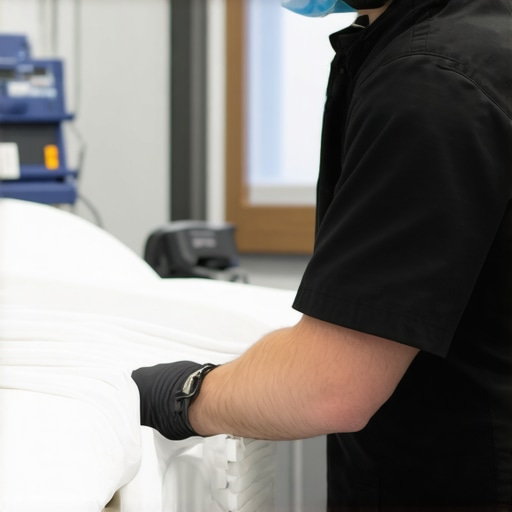 Many assume that purchasing the latest medical device guarantees optimal patient outcomes, but the reality is far more nuanced. One common myth is that newer technology always outperforms older equipment, yet in practice, compatibility, staff training, and maintenance often determine success more than innovation alone. For example, adopting advanced devices like shockwave therapy units requires understanding their proper calibration and indications, as misuse can lead to ineffective treatment or patient harm.
Are Cutting-Edge Devices Always the Best Choice for Your Facility?
Experts warn that rushing to implement the newest gadgets without thorough evaluation can backfire. A study in the Journal of Medical Devices highlights that improperly integrated equipment increases the risk of errors and operational delays. It’s essential to assess whether new devices align with your workflow and staff expertise before making a purchase. Don’t fall into the trap of assuming that high-tech equals high-quality—sometimes, proven, reliable devices outperform flashy upgrades. Instead, focus on how well equipment fits your specific needs, how staff are trained to use it, and ongoing support for maintenance and updates. For instance, when considering innovative solutions like smart slings for shoulder treatment, ensure you’re familiar with their proper application to maximize patient safety and device lifespan. Remember, effective implementation depends on understanding the nuances—like calibration settings, compatibility with existing systems, and user familiarity—that often go unnoticed during initial procurement. Staying informed through expert sources and case studies can unveil these critical details, helping you avoid costly mistakes and improve patient care. If you’re contemplating new equipment investments, ask yourself whether you’ve evaluated all these factors thoroughly. Have you ever fallen into this trap? Let me know in the comments.Maintaining the longevity and performance of medical equipment requires a combination of the right tools and diligent practices. I personally rely on a curated set of devices that ensure each piece of equipment functions optimally over time. For instance, investing in a reliable electronic diagnostic tool like the portable EKG devices discussed here https://medicaldeviceinsight.com/6-portable-ekg-tools-for-home-care-in-2026 has been transformative in my practice. These compact units provide quick, accurate readings, enabling timely interventions and reducing hospital visits.
One of my go-to maintenance strategies involves routine calibration using precision calibration kits. Regular calibration minimizes drift in measurements, which is crucial for devices like blood analyzers or imaging equipment. I’ve found that scheduling calibration every six months, aligned with the manufacturer’s recommendations, prevents costly downtime. Incorporating software updates also plays a vital role; I ensure that firmware is kept current via secure download portals. This approach not only patches vulnerabilities but also enhances device capabilities, as highlighted in recent industry reports.
To keep equipment running smoothly, I advocate for the use of specialized cleaning and sterilization tools. For example, ultrasonic cleaners are excellent for delicate components, effectively removing residues that manual cleaning might miss. These tools extend device lifespan and uphold infection control standards.
Looking ahead, trends point toward the integration of AI and IoT into maintenance routines. IoT-enabled sensors can monitor device health in real-time, alerting staff to potential issues before failure occurs. For instance, predictive maintenance driven by AI algorithms, like those discussed in https://medicaldeviceinsight.com/6-ai-powered-exoskeletons-speeding-up-home-rehab-2026-data, is set to revolutionize how we care for equipment.
So, how do you maintain your medical tools over time? Emphasize routine calibration, leverage software updates, and consider adopting IoT-connected sensors for predictive diagnostics. I highly recommend trying out a portable calibration device for your critical instruments. It simplifies calibration tasks and ensures consistent accuracy, ultimately saving you time and preventing costly repairs. By integrating these precise maintenance practices, you’ll ensure your medical equipment remains reliable, safe, and effective in delivering patient care.
The Hardest Lesson I Learned About Medical Equipment, Medical Devices, Medical Supplies
One invaluable insight came from realizing that quality alone doesn’t guarantee safety without proper handling and maintenance. A high-end device sitting idle for months can become a source of contamination if not properly maintained.
Sometimes, I underestimated the power of simple innovations like antimicrobial mattress covers, only to discover how a small upgrade could drastically reduce infection rates. It taught me that innovation often resides in simple, well-executed ideas.
From my experience, staff training isn’t a one-time event; it’s an ongoing journey. Keeping everyone updated on best practices ensures that protective measures like breathable mattress covers genuinely serve their purpose, preventing unseen hazards.
My Essential Toolkit for Infection-Free Patient Environments
I trust resources such as the detailed reviews on Medical Device Insight for insights into antimicrobial technologies. Additionally, selecting suppliers with certifications ensures that the mattress covers and protective equipment meet rigorous safety standards.
Books like “Infection Control in Healthcare Facilities” have shaped my understanding of comprehensive hygiene strategies. They emphasize that combining technology with diligent protocols is the key to reducing infection risks.
Finally, I rely on peer-reviewed studies and case reports accessible through industry journals to stay updated on emerging innovations, such as nanotech-infused antimicrobial fabrics that promise even greater protection.
Trust Your Instincts and Embrace Change Like a Pro
The path to safer, more hygienic healthcare environments is paved with continuous learning and adaptation. Don’t hesitate to experiment with new materials or protocols—each small step contributes to a larger safety net for patients and staff alike. Remember, integrating cutting-edge solutions like smart slings that track shoulder movement or intelligent bed systems can transform your facility from reactive to proactive in infection control efforts.
What new strategy or tool have you recently adopted to improve your infection control standards? Share your experiences in the comments below—your insights could inspire someone else to take the next crucial step in patient safety.